






What's Happening?
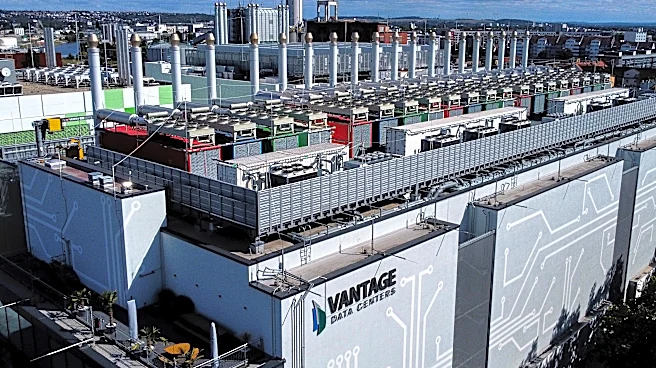
The European Union has announced a $11.4 billion investment to build seven AI gigafactories, aiming to close the gap with the U.S. and China in AI development. These gigafactories are expected to significantly enhance the EU's computing power, currently
provided by 19 AI data centers across the continent. The initiative is part of the EU's strategy to achieve tech sovereignty and reduce reliance on foreign technology providers. The gigafactories will house at least 100,000 advanced AI chips, making them four times more powerful than existing EU data centers. The EU hopes to attract an additional $22.8 billion in private investment to support this initiative.
Why It's Important?
This investment marks a significant step for the EU in its efforts to become a major player in the global AI landscape. By enhancing its AI infrastructure, the EU aims to foster innovation and competitiveness within its tech sector. The move also addresses concerns about dependency on U.S. and Chinese technology, which could pose risks to data security and service continuity. The development of AI gigafactories is expected to boost the EU's economic growth and technological capabilities, potentially leading to new job opportunities and advancements in AI applications.
What's Next?
As the EU progresses with its gigafactory plans, it will need to navigate challenges related to funding, construction, and regulatory compliance. The success of this initiative will depend on the ability to attract private investment and ensure that the gigafactories adhere to EU standards on data protection and ethics. The EU's efforts may prompt responses from the U.S. and China, potentially leading to increased competition in the AI sector. The global tech community will be watching closely to see how the EU's strategy unfolds and its impact on the international AI market.