




What's Happening?
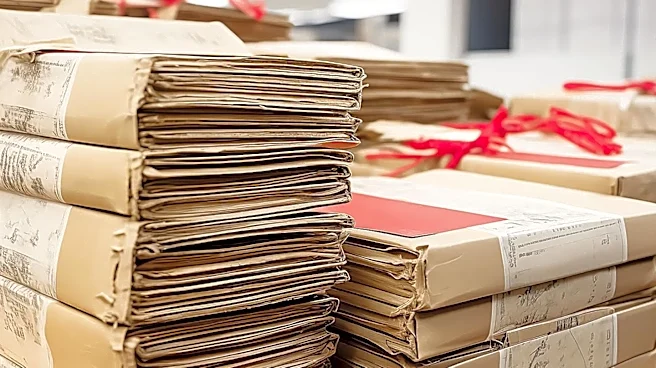
The National Library of Israel has digitized nearly five decades of The New York Jewish Week, making its archives freely accessible to the public for the first time through its Historical Jewish Press collection. This initiative provides a comprehensive
record of Jewish life in New York, spanning from the community's founding in 1654 to contemporary issues. The archive captures major events, everyday issues, personalities, and cultural shifts that have shaped the Jewish community in the city. To commemorate this milestone, the National Library of Israel and The New York Jewish Week will host an event titled 'The Pages of Our Past: Digitizing New York’s Jewish Stories' on November 17, featuring discussions with past and present journalists and the project manager from the National Library of Israel.
Why It's Important?
This digitization effort is crucial for preserving and making accessible a significant part of U.S. cultural and historical heritage. The New York Jewish Week, described by historian Jonathan Sarna as 'the most important American Jewish newspaper of its time,' offers invaluable insights into the experiences of generations of Jewish New Yorkers. For researchers, historians, and the general public, this archive provides a rich primary source for understanding social, cultural, and political developments within one of America's most prominent Jewish communities. In a time of rising antisemitism and internal divisions, access to this historical context can foster a deeper understanding of the community's resilience, its responses to change, and its contributions to New York City's identity. The project also highlights the broader trend of digitizing historical records to ensure their longevity and accessibility.
What's Next?
The event on November 17 will serve as a platform to explore the newly available archive and discuss its implications for understanding New York's Jewish past and informing its present. In addition to the event, the two organizations are collaborating on an email series, '9 Moments That Made Jewish New York What It Is Today,' which will delve into surprising and often overlooked moments in the city's Jewish history. These initiatives aim to engage the public with the digitized content and encourage a deeper appreciation for the community's heritage. The ongoing efforts by the National Library of Israel to preserve historic Jewish newspapers globally suggest that similar digitization projects for other U.S. Jewish publications may follow, further enriching the digital historical record.
Beyond the Headlines
The digitization of historical newspapers like The New York Jewish Week transcends mere archival convenience; it democratizes access to history and empowers diverse communities to connect with their past. This project underscores the evolving role of libraries and cultural institutions in the digital age, moving beyond physical preservation to active digital curation and dissemination. By making these records freely available, it enables a more inclusive and nuanced understanding of American history, challenging monolithic narratives and highlighting the contributions of specific cultural groups. The initiative also implicitly addresses the contemporary challenges of antisemitism and communal divisions by offering a shared historical narrative that can potentially foster unity and understanding through education and reflection.