






What's Happening?
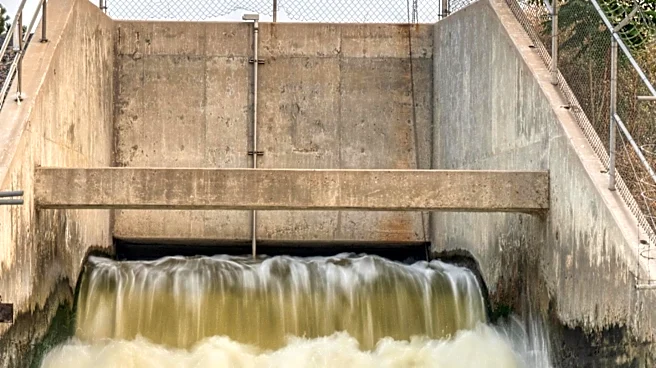
The All-American Canal, located in southeastern California, diverts approximately 3.1 million acre-feet of Colorado River water annually, making it the single largest user of the river's water. This volume surpasses the combined diversions of the Central
Arizona Project and the Colorado River Aqueduct. The canal, an 80-mile gravity-fed system, irrigates half a million acres of desert farmland and supplies nine cities. Its construction was authorized under the Boulder Canyon Project Act to ensure water delivery to the Imperial Valley without crossing into Mexico, a problem faced by its predecessor, the Alamo Canal. The Imperial Irrigation District holds the largest single entitlement to the Colorado River, exceeding the claims of entire states like Arizona and Nevada. The canal's efficiency is notable as it operates entirely by gravity, unlike other major aqueducts that require extensive pumping.
Why It's Important?
The immense water diversion by the All-American Canal highlights the significant agricultural demands placed on the Colorado River, a critical resource for the American Southwest. The Imperial Valley, supported by this canal, is one of the world's most productive agricultural regions, supplying a substantial portion of American winter vegetables and cattle feed. This reliance on a single canal for such a large volume of water underscores the vulnerability of the region's food supply to water availability issues. The historical context of the canal's construction, driven by political and physical challenges with the previous cross-border system, illustrates the long-standing complexities of water rights and infrastructure in the arid Western U.S. The ongoing debate over water allocation and conservation in the Colorado River Basin is directly impacted by such large-scale agricultural usage, often pitting urban and environmental needs against established agricultural entitlements.
What's Next?
The future of water allocation in the Colorado River Basin will likely continue to be a contentious issue, especially given the significant demands of the All-American Canal. While the canal's lining project in the early 2000s aimed to conserve water, it also sparked controversy by reducing seepage that had historically recharged aquifers and sustained wetlands in Mexico. This illustrates the interconnectedness of water systems and the potential for conservation efforts in one area to have unintended consequences elsewhere. Discussions around water conservation and potential cuts, particularly in agriculture, are expected to intensify as the region faces increasing aridification and declining reservoir levels. The legal and political battles over water rights, including potential interstate litigation, will shape how the Colorado River's resources are managed in the coming years, with the All-American Canal's operations remaining a central point of consideration.
Beyond the Headlines
The All-American Canal's story extends beyond mere infrastructure, touching upon profound ethical and environmental considerations. The historical decision to prioritize American agricultural interests through a fully domestic canal, while understandable from a national security perspective at the time, has long-term implications for cross-border water relations and ecosystem health. The creation of the Salton Sea, an accidental outcome of the previous canal's failure, serves as a stark reminder of the ecological consequences of large-scale water management projects. Furthermore, the canal's dangerous nature, with numerous drownings due to its swift currents and steep sides, highlights the human cost associated with such vital infrastructure. The ongoing challenge of balancing agricultural productivity, urban water supply, environmental sustainability, and international water agreements in the Colorado River Basin represents a complex interplay of economic, social, and ecological factors that will continue to define the region's future.