






What's Happening?
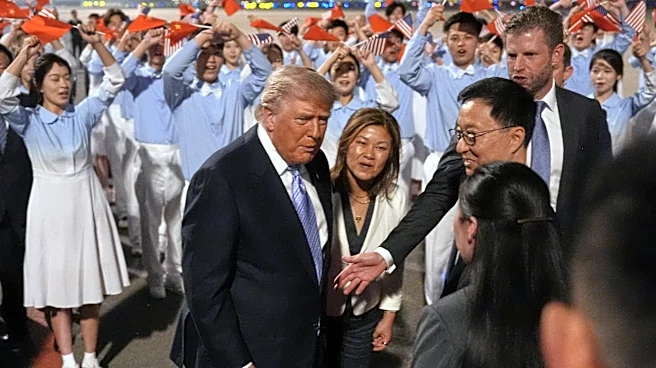
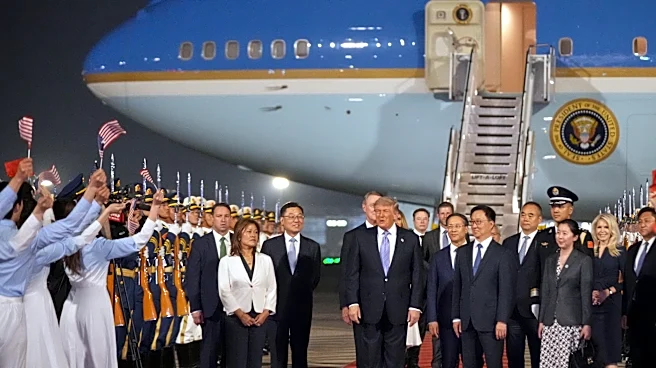
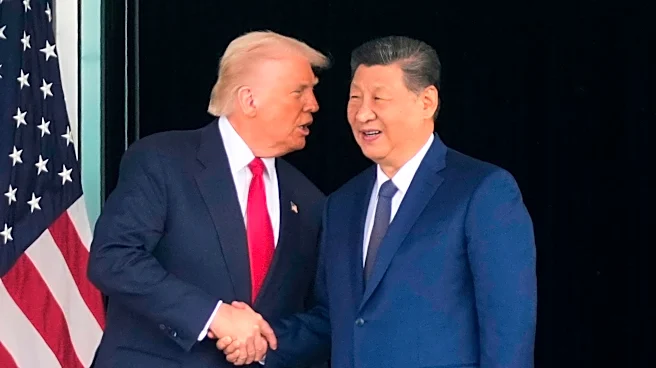
President Trump is currently in Beijing for a state visit with Chinese President Xi Jinping. The meeting is seen as a pivotal moment for U.S.-China relations, with discussions focusing on forming a partnership to address global food security challenges.
The proposed collaboration aims to sustainably feed the projected 9.5 to 10 billion global population by 2050, with a particular focus on improving agricultural infrastructure in Africa. This initiative is inspired by the legacy of Iowa's Nobel Peace Prize Laureate Dr. Norman Borlaug, who emphasized the importance of infrastructure in feeding Africa. The summit is viewed as an opportunity to redefine the U.S.-China relationship from adversarial to cooperative, particularly in the realm of agriculture.
Why It's Important?
The potential partnership between the U.S. and China could have significant implications for global food security and international relations. By focusing on agriculture, the two nations could address one of the most pressing challenges of the 21st century: feeding a rapidly growing global population. This collaboration could also serve as a model for how major powers can work together to solve global issues, potentially easing tensions and fostering peace. The initiative could lead to improved agricultural practices and infrastructure in Africa, contributing to economic development and stability in the region. For the U.S., this partnership could enhance its diplomatic standing and influence in global agricultural policy.
What's Next?
If the partnership is formalized, the next steps would likely involve detailed planning and implementation of agricultural projects in Africa. This could include building roads and other infrastructure to support farming and market access. The initiative may also prompt further diplomatic engagements between the U.S. and China, potentially leading to broader cooperation in other areas. Stakeholders such as international organizations, African governments, and agricultural experts will likely play crucial roles in the execution of this plan. The success of this partnership could influence future U.S.-China collaborations and set a precedent for addressing other global challenges.
Beyond the Headlines
The proposed U.S.-China agricultural partnership could have deeper implications beyond immediate food security. It may signal a shift in how global powers approach international relations, moving from competition to collaboration. This could lead to a new era of diplomacy where countries work together to tackle shared challenges. The initiative also highlights the role of agriculture as a tool for peace and development, potentially inspiring similar efforts in other regions. Additionally, the focus on Africa underscores the continent's growing importance in global economic and political strategies.