
What's Happening?
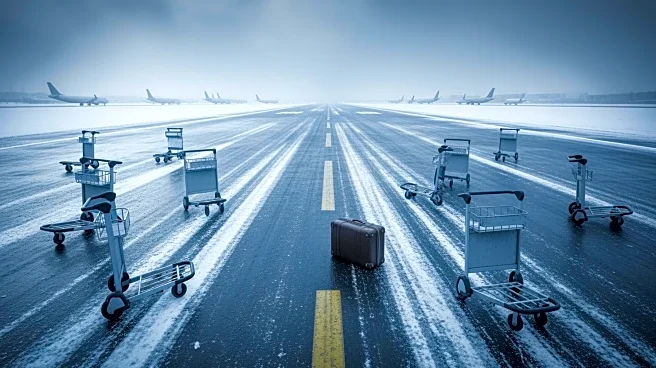
A major winter storm has led to the cancellation of over 3,000 flights across the East Coast this weekend. The storm's track and timing have severely impacted travel plans, causing widespread disruptions
at airports. The cancellations are part of a broader pattern of travel chaos as the storm brings dangerous snow and cold conditions, affecting millions of Americans. Airlines and passengers are facing significant challenges as they navigate the logistical and safety issues posed by the severe weather.
Why It's Important?
The widespread flight cancellations highlight the vulnerability of air travel to extreme weather events, which can lead to significant economic and logistical disruptions. Airlines face financial losses due to the cancellations, while passengers experience inconvenience and potential financial strain from altered travel plans. The storm underscores the need for improved weather forecasting and contingency planning by airlines and airports to mitigate the impact of such events. Additionally, the storm's effects on travel may influence public policy discussions on infrastructure resilience and climate adaptation strategies.
What's Next?
As the storm progresses, airlines and airports will continue to manage the fallout from the cancellations, including rescheduling flights and assisting stranded passengers. The situation may prompt airlines to review their emergency response protocols and invest in technologies to better predict and respond to severe weather. In the longer term, the storm's impact could lead to increased advocacy for infrastructure improvements and climate resilience measures to better prepare for future weather-related disruptions.