

What's Happening?
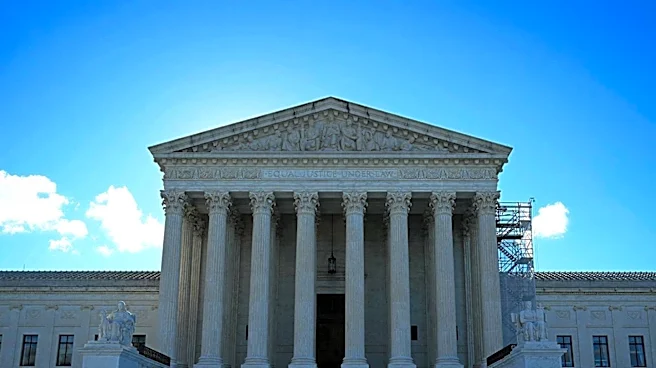
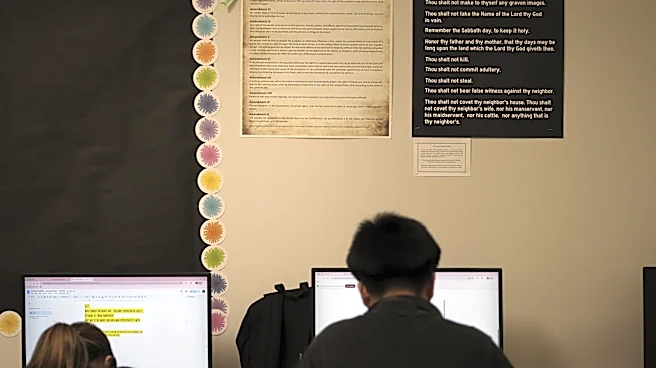
More than two dozen Texas families are urging the U.S. Supreme Court to review a state law, Senate Bill 10, which mandates the display of a Protestant version of the Ten Commandments in every public school classroom from kindergarten through 12th grade.
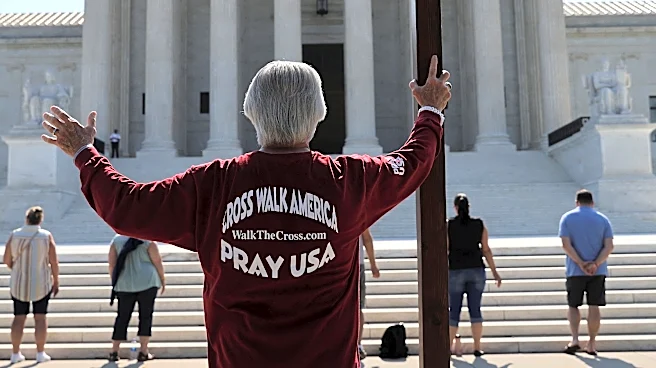
The families, represented by organizations including the American Civil Liberties Union of Texas and Americans United for Separation of Church and State, filed a joint petition for a writ of certiorari. This action follows an April decision by the en banc U.S. Circuit Court of Appeals for the 5th Circuit, which narrowly ruled that S.B. 10 does not violate the Establishment or Free Exercise Clauses of the First Amendment. The petitioners argue that the law infringes upon students' and parents' religious freedom by promoting a state-favored religious belief and interfering with parental rights to guide their children's religious instruction.
Why It's Important?
This petition to the Supreme Court is highly significant as it directly challenges the separation of church and state in public education, a foundational principle of U.S. law. If the Supreme Court agrees to hear the case, its decision could have far-reaching implications for religious freedom and public education nationwide. A ruling upholding the Texas law could encourage similar legislation in other states, potentially leading to a proliferation of religious displays in public schools and raising concerns about religious coercion for students from diverse backgrounds. Conversely, striking down the law would reaffirm the constitutional protection against government endorsement of religion, ensuring that public schools remain neutral on religious matters. The outcome will impact students, parents, and educators by defining the boundaries of religious expression within public educational institutions and influencing how religious diversity is accommodated in schools.
What's Next?
The immediate next step is for the U.S. Supreme Court to decide whether it will grant the petition for a writ of certiorari, meaning it will agree to hear the case. There is no set timeline for this decision, but the Court typically reviews thousands of such petitions annually and grants only a small fraction. If the Court declines to hear the case, the 5th Circuit's ruling, which upheld the Texas law, will stand, allowing the mandatory display of the Ten Commandments in Texas public school classrooms. If the Court grants certiorari, the case will proceed to oral arguments, likely in a future term, followed by a final decision. Major stakeholders, including religious freedom advocates, educational institutions, and state legislatures, will closely monitor the Court's decision, as it could set a national precedent for the role of religion in public schools.
Beyond the Headlines
The debate over displaying the Ten Commandments in public schools delves into the deeper societal tension between religious freedom and the principle of governmental neutrality towards religion. This case highlights the ongoing struggle to define the appropriate role of religious texts and symbols in public institutions, particularly in educational settings where impressionable children are present. Critics argue that such displays can create an environment where non-adherents feel marginalized or coerced, undermining the inclusive nature of public education. Proponents, however, often view these displays as a recognition of historical and cultural heritage, or as a means to promote moral values. The Supreme Court's engagement with this issue, or its decision not to, will reflect the current judicial interpretation of the Establishment Clause and could influence cultural norms regarding religious expression in the public square for years to come, potentially sparking further legislative efforts or legal challenges across the country.