
What's Happening?
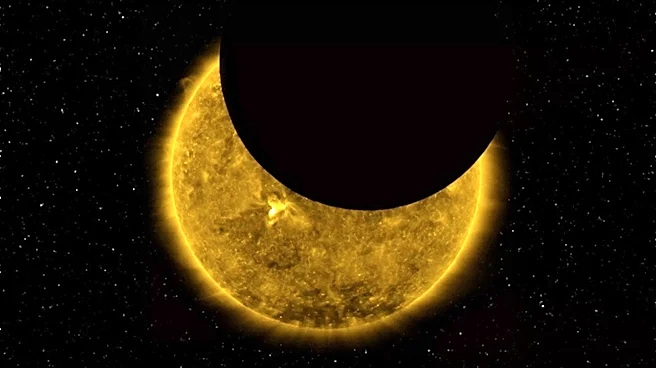
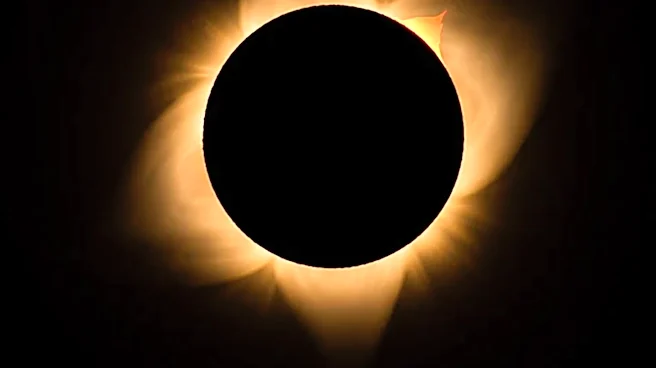
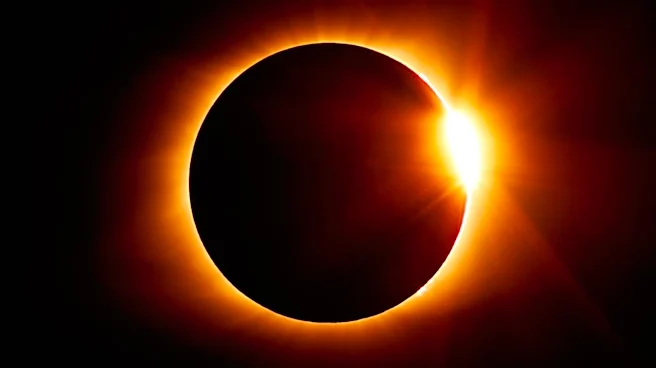
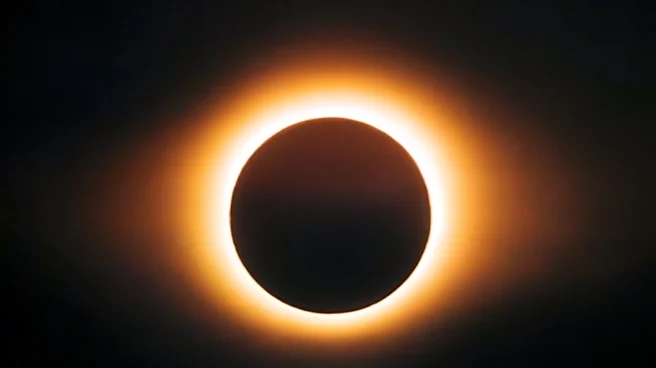
A solar eclipse is set to occur on August 12, 2026, offering a spectacular celestial event for observers in various parts of the world. The eclipse will be total in regions such as northern Russia, Greenland,
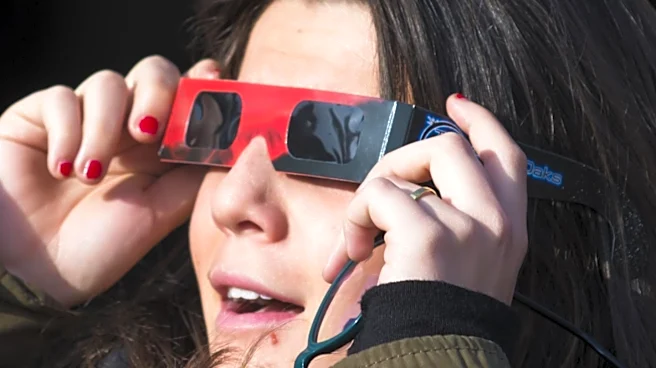
Iceland, Spain, and Portugal, while a partial eclipse will be visible in parts of the northern United States, Canada, and Europe. Observers are advised to use proper eye protection, such as eclipse glasses, to safely view the event. The eclipse presents a unique opportunity for scientific observation and public engagement with astronomy.
Why It's Important?
Solar eclipses are rare astronomical events that provide valuable opportunities for scientific research and public education. They allow scientists to study the Sun's corona and other solar phenomena, contributing to our understanding of solar physics. For the public, eclipses offer a chance to engage with science and nature, fostering interest in astronomy and related fields. The event also has cultural significance, as it brings people together to witness a shared natural spectacle.
What's Next?
As the eclipse approaches, educational institutions and scientific organizations are likely to organize viewing events and public outreach programs. These initiatives aim to educate the public about the science behind eclipses and promote safe viewing practices. The event may also inspire future scientific research and collaborations, as well as increased interest in space exploration and astronomy.