

What's Happening?
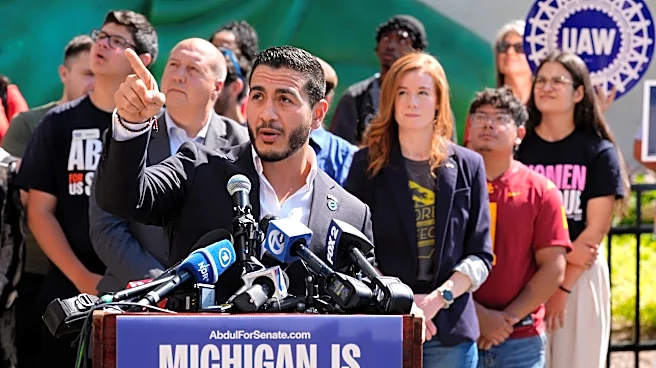
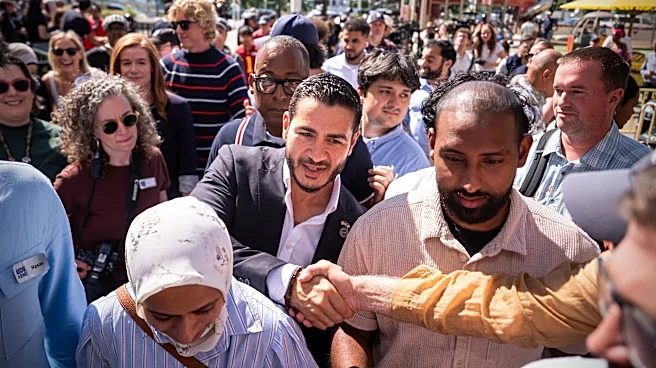
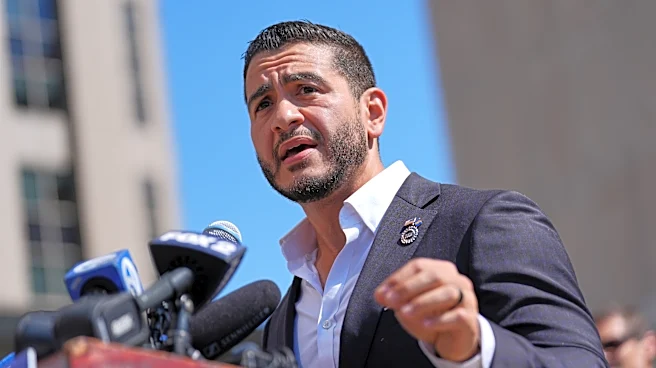
Abdul El-Sayed, a progressive candidate, has won the Democratic primary for the U.S. Senate in Michigan, overcoming significant opposition from pro-Israel groups and the Democratic establishment. El-Sayed's campaign faced substantial financial challenges,
with groups like the American Israel Public Affairs Committee (AIPAC) spending heavily against him. Despite this, El-Sayed secured a narrow victory over Congresswoman Haley Stevens, who had the backing of prominent Democratic figures. This win is part of a broader trend of progressive victories in Michigan, signaling a shift in the political landscape.
Why It's Important?
El-Sayed's victory is significant as it represents a challenge to the influence of pro-Israel groups within the Democratic Party. His success suggests that grassroots campaigns and progressive platforms can overcome substantial financial and institutional opposition. This development may encourage other progressive candidates to pursue similar strategies, potentially reshaping the Democratic Party's approach to key issues such as foreign policy and campaign finance. The outcome also highlights a growing divide within the party, as voters increasingly support candidates who advocate for change and challenge the status quo.
What's Next?
El-Sayed will now face former Republican Congressman Mike Rogers in the general election, where he is expected to continue advocating for progressive policies. The race will likely draw significant national attention, as it could influence the balance of power in the Senate. AIPAC and other pro-Israel groups are expected to continue their efforts to oppose El-Sayed, making the general election a high-stakes contest. The results could have lasting implications for the Democratic Party's strategy and the role of special interest groups in U.S. politics.