
What's Happening?
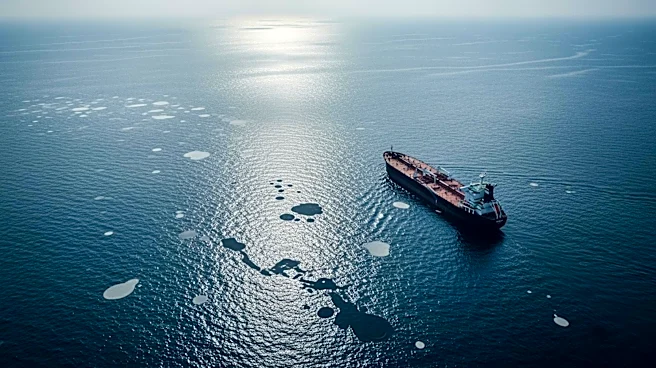
India's economic and strategic interests in the Gulf region are being challenged by Iran's recent actions, which include obstructing commercial shipping through the Strait of Hormuz and launching attacks
on Gulf states. These developments are significant for India, as the Gulf Cooperation Council (GCC) is India's largest trading partner bloc, with bilateral trade exceeding $178 billion in FY 2024-25. The region is crucial for India's energy imports, with a significant portion of crude oil and liquefied petroleum gas (LPG) transiting through the Hormuz corridor. Iran's actions threaten the stability of this vital trade route, impacting India's energy security and economic stability. The situation is further complicated by Iran's nuclear ambitions and its use of proxy forces, which pose a threat to regional stability.
Why It's Important?
The Gulf region's stability is crucial for India's economic growth and energy security. Disruptions in the Strait of Hormuz could lead to increased energy costs and supply chain disruptions, affecting millions of Indian households and businesses. India's strategic partnerships with Gulf states, Israel, and the United States are also at stake, as these relationships are built on mutual interests in regional stability. The ongoing tensions highlight the need for India to reassess its foreign policy and strategic autonomy, balancing its relationships with multiple partners while advocating for regional stability. The outcome of this situation will have long-term implications for India's economic and geopolitical landscape.
What's Next?
India is likely to continue its diplomatic efforts to ensure regional stability and secure its energy supply chains. This may involve strengthening partnerships with Gulf states and other regional allies, as well as engaging in dialogue with Iran to address the underlying issues. The potential for a broader Free Trade Agreement with the GCC and the proposed India-Middle East-Europe Economic Corridor could further deepen India's economic ties with the region. However, these initiatives depend on a stable and predictable regional environment, free from Iranian coercion and disruptions.
Beyond the Headlines
The situation underscores the broader geopolitical dynamics in the Middle East, where Iran's actions have far-reaching implications beyond the immediate region. India's strategic autonomy and its ability to navigate complex international relationships will be tested as it seeks to protect its interests in the Gulf. The evolving situation also highlights the interconnectedness of global energy markets and the importance of maintaining open and secure trade routes. India's response to these challenges will shape its role in the region and its relationships with key global powers.