





What's Happening?
Two-way radio technology provides a robust communication solution that operates independently of cellular networks, making it highly reliable in areas with limited or no mobile phone coverage. These devices, unlike traditional radios that only receive
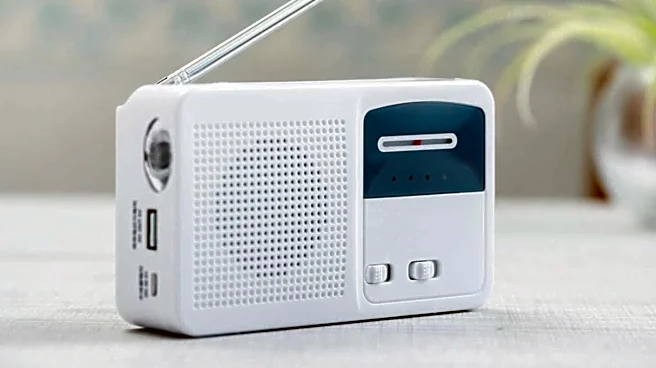
signals, enable real-time voice signal transmission and reception between individuals or groups. The core mechanism involves converting voice signals into radio waves for transmission and then converting received waves back into audio. Modern two-way radios often incorporate digital technology to enhance clarity, extend range, and improve security. Various types exist, including handheld walkie-talkies for personal or event use, mobile radios installed in vehicles for emergency services and transportation, and base station radios for fixed locations like dispatch centers. Specialized marine and aviation radios also adhere to specific frequency regulations for watercraft and aircraft communication.
Why It's Important?
The independence of two-way radios from cellular networks is a critical advantage, particularly for industries and activities that operate in remote or challenging environments where mobile phone service is unreliable. This reliability ensures continuous communication for emergency responders, construction crews, and outdoor enthusiasts, directly impacting safety and operational efficiency. The instant communication facilitated by the Push-to-Talk (PTT) feature eliminates delays associated with dialing or waiting for connections, which is vital in time-sensitive situations. Furthermore, the cost-effectiveness of two-way radios, due to the absence of monthly service fees, makes them an economical long-term communication solution for businesses and organizations. Their inherent durability, designed to withstand harsh conditions, also contributes to their importance in demanding professional and recreational settings, ensuring consistent performance where other communication methods might fail.
What's Next?
The continued evolution of two-way radio technology is likely to focus on further advancements in digital capabilities, aiming for even clearer communication, extended range, and enhanced security features. As industries increasingly rely on real-time coordination in diverse environments, the demand for robust and independent communication tools will persist. Manufacturers may explore integrating more advanced features such as improved GPS tracking, noise cancellation, and waterproofing to cater to specialized needs. The development of more energy-efficient models with longer battery life will also be a key area of focus, addressing the practical requirements of users in the field. Additionally, adherence to and adaptation to evolving frequency regulations will remain crucial for specialized marine and aviation radios, ensuring seamless and compliant operation in their respective domains.
Beyond the Headlines
The enduring relevance of two-way radio technology highlights a broader societal need for resilient communication infrastructure that is not solely dependent on centralized networks. In an era where digital connectivity is often taken for granted, the ability to communicate off-grid or in disaster-stricken areas underscores the critical role of alternative communication methods. This technology fosters self-reliance and preparedness, empowering individuals and organizations to maintain vital connections when conventional systems fail. The ethical implications extend to ensuring equitable access to such reliable communication tools, particularly for vulnerable communities or those in remote regions. Culturally, two-way radios represent a blend of traditional communication principles with modern technological enhancements, emphasizing the value of direct, immediate human interaction in an increasingly mediated world.