






What's Happening?
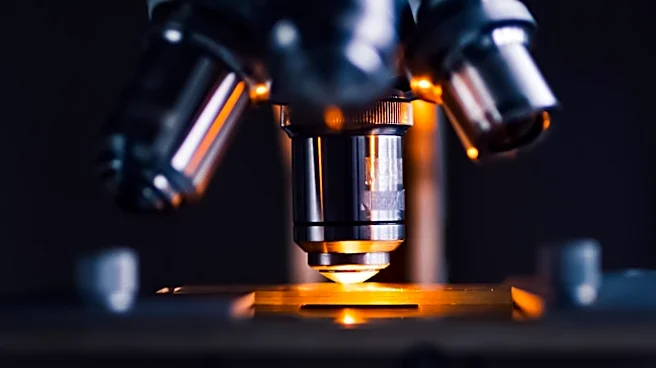
A recent study published in npj Parkinson's Disease has uncovered previously undetected tau pathology in the brains of Parkinson's disease patients. Researchers used advanced techniques like single-molecule pull-down assays and super-resolution microscopy
to identify nanoscopic tau aggregates in the putamen, a brain region where standard tests showed little tau presence. The study analyzed brain tissue from 29 post-mortem donors, revealing that these tau aggregates were more prevalent in Parkinson's patients with dementia. This discovery suggests that tau pathology in Parkinson's may have been underestimated by conventional methods.
Why It's Important?
The findings highlight the complexity of Parkinson's disease pathology and suggest that tau aggregates may play a more significant role in the disease than previously thought. This could lead to new avenues for research and treatment, as targeting these nanoscopic tau aggregates might offer a way to slow or prevent neurodegeneration in Parkinson's patients. Understanding the interplay between tau and alpha-synuclein, another protein involved in Parkinson's, could also provide insights into the disease's progression and potential therapeutic targets.
What's Next?
Further research is needed to explore the mechanisms by which tau aggregates contribute to Parkinson's disease and to determine their potential as therapeutic targets. Future studies may focus on developing methods to detect and quantify these aggregates in living patients, which could aid in early diagnosis and monitoring of disease progression. Additionally, researchers will investigate the relationship between tau and other pathological features of Parkinson's to develop more comprehensive treatment strategies.