
What's Happening?
Iran is currently experiencing widespread protests, prompting the Iranian leadership to prioritize domestic stability over external confrontations. Recent military exercises by the Islamic Revolutionary
Guard Corps, including missile launches and air defense tests, have heightened tensions. Despite these developments, a senior Israeli analyst suggests that Iran is not seeking conflict with Israel or the United States. The Iranian regime is reportedly using a combination of limited repression and economic incentives to calm the public. This approach aims to restore order without escalating into a broader conflict, as the regime is wary of the potential consequences of excessive force.
Why It's Important?
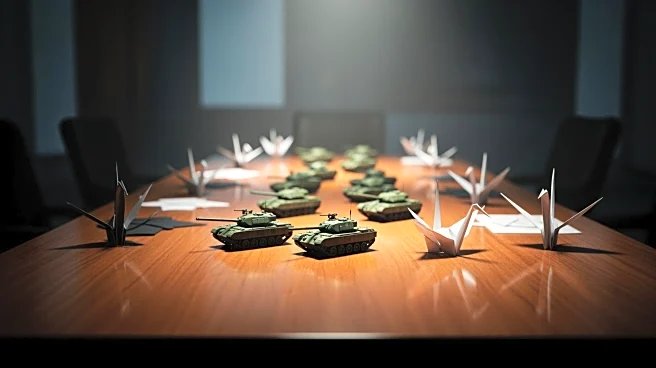
The situation in Iran is significant as it highlights the delicate balance the regime is trying to maintain between internal stability and external pressures. The ongoing protests and the regime's response could have implications for regional stability, particularly concerning Israel and the United States. President Trump's warning of intervention if protesters are harmed adds another layer of complexity, potentially influencing U.S.-Iran relations. The Iranian leadership's strategy reflects a cautious approach to avoid provoking a larger conflict, which could destabilize the region further and impact global geopolitical dynamics.
What's Next?
The Iranian regime is likely to continue its current strategy of limited repression and economic incentives to manage the protests. However, the situation remains fluid, and any miscalculation could lead to unintended consequences. The international community, particularly the U.S. and Israel, will be closely monitoring Iran's actions. Any escalation could prompt a response from these countries, potentially leading to a broader conflict. The regime's ability to maintain control without resorting to excessive force will be crucial in determining the future trajectory of the protests and Iran's relations with other nations.