



What's Happening?
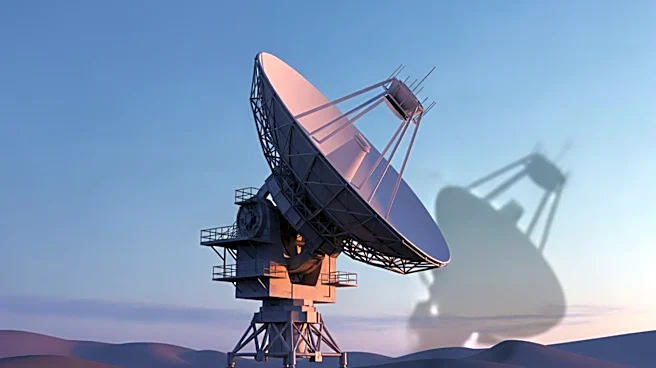
NASA has concluded its investigation into the mishap involving the Deep Space Station 14 (DSS-14) antenna at the Goldstone Deep Space Communications Complex. The incident, classified as a Type A mishap, occurred when the antenna over-rotated while tracking
the Juno mission, causing significant damage. The investigation identified software weaknesses, human error, and an undetected failure in the hydraulic limit system as primary causes. NASA is implementing recommendations to improve training, operational procedures, and system design to prevent future incidents. Repairs and upgrades to the antenna are underway, with completion expected by October 2028.
Why It's Important?
The mishap at the Goldstone complex highlights the challenges of maintaining and operating critical space infrastructure. The investigation's findings underscore the need for rigorous safety protocols and continuous improvement in operational practices. By addressing the identified issues, NASA aims to enhance the reliability and resilience of its Deep Space Network, which is essential for supporting current and future space missions. The incident also serves as a reminder of the complexities involved in space exploration and the importance of learning from setbacks to advance technological capabilities.
What's Next?
NASA will continue to implement the investigation's recommendations, focusing on strengthening processes and training across its network sites. The repairs and upgrades to the DSS-14 antenna will proceed, ensuring it is ready to support future missions. The agency will also work to enhance its overall network capabilities, preparing for upcoming exploration and science missions. The lessons learned from this incident will inform NASA's approach to managing and operating its space infrastructure, contributing to the success of its ambitious mission portfolio.