






What's Happening?
America’s Credit Unions, along with its Political Action Committee (PAC), has initiated five new political advertising campaigns for House candidates in anticipation of the upcoming November general election. These advertisements are scheduled to begin
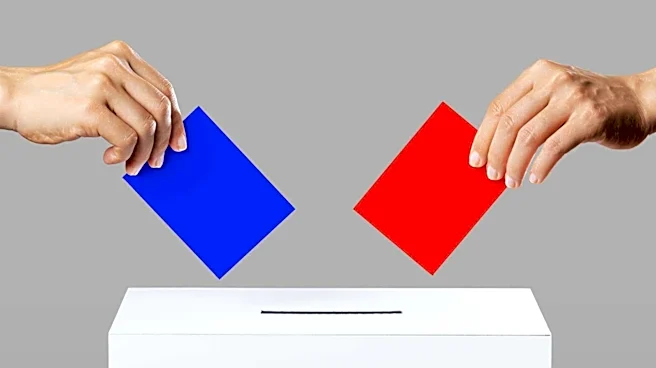
running over the next two weeks. The initiative reflects a bipartisan approach, supporting both Republican and Democratic members of Congress. The candidates receiving support include Rep. Brian Fitzpatrick (R-PA-1), Rep. Vicente Gonzalez (D-TX-34), Rep. Steve Horsford (D-NV-3), Rep. Young Kim (R-CA-40), and Rep. Dina Titus (D-NV-1). Trey Hawkins, Head of Political Affairs at America’s Credit Unions, stated that the organization's political engagement is founded on a balanced and bipartisan strategy. This support is directed towards lawmakers who have consistently championed priorities important to credit unions. The announcement underscores the credit union industry's commitment to engaging with political leaders across the aisle to advocate for their interests.
Why It's Important?
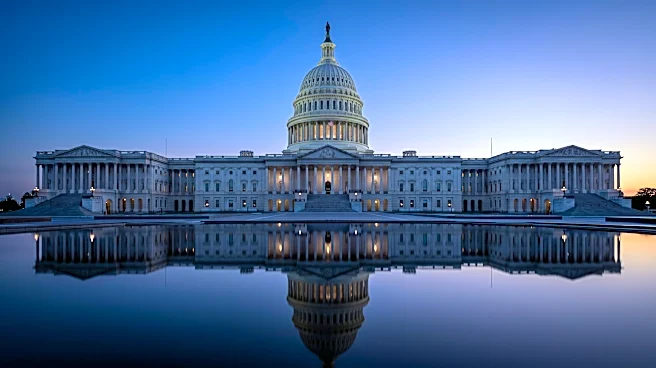
This bipartisan advertising spend by America’s Credit Unions highlights the strategic importance of political engagement for industry groups in the U.S. The decision to support candidates from both major parties demonstrates an effort to build relationships and influence policy regardless of which party controls Congress. For the credit union industry, this approach ensures that their legislative priorities, which often include regulatory frameworks, consumer protection, and financial services access, receive attention and support from a broad spectrum of lawmakers. By investing in these campaigns, America's Credit Unions aims to secure a favorable legislative environment that benefits its members and the broader financial cooperative movement. This strategy is crucial for maintaining their competitive position within the financial sector and for advocating for policies that support their unique operational model, which often emphasizes community-focused banking and member benefits.
What's Next?
The new advertising campaigns are set to commence over the next two weeks, leading up to the November general election. The impact of these advertisements will be closely watched, particularly in the competitive House races where these candidates are running. The success of these campaigns could influence the legislative landscape for credit unions in the next congressional session. Following the election, America’s Credit Unions will likely continue its engagement with the elected officials, working to advance its policy agenda. This will involve lobbying efforts, participation in congressional hearings, and ongoing communication with lawmakers and their staff to ensure that credit union priorities remain on the legislative agenda. The organization will also assess the effectiveness of its bipartisan strategy in securing favorable outcomes for the industry.
Beyond the Headlines
The bipartisan nature of America’s Credit Unions' political spending reflects a broader trend among certain industry groups to diversify their political investments. This approach can be seen as a pragmatic strategy to ensure influence and access regardless of shifts in political power. It also underscores the complex dynamics of lobbying in Washington D.C., where building consensus across party lines can be more effective than aligning with a single political faction. For the credit union sector, this strategy may help mitigate risks associated with partisan gridlock or sudden policy shifts that could negatively impact their operations. Furthermore, it highlights the ongoing effort by various sectors to shape public policy in a way that supports their specific economic models and serves their member bases, often by emphasizing their contributions to local economies and communities.