






What's Happening?
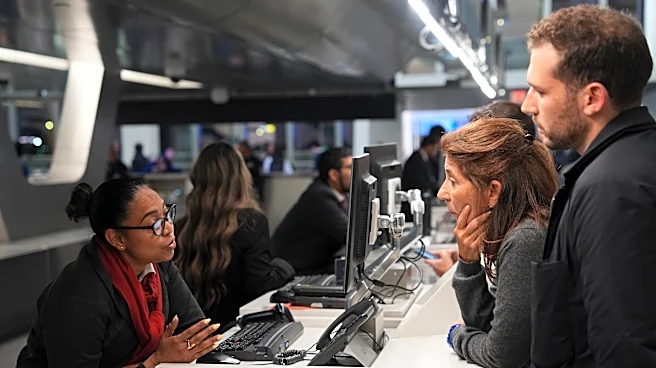
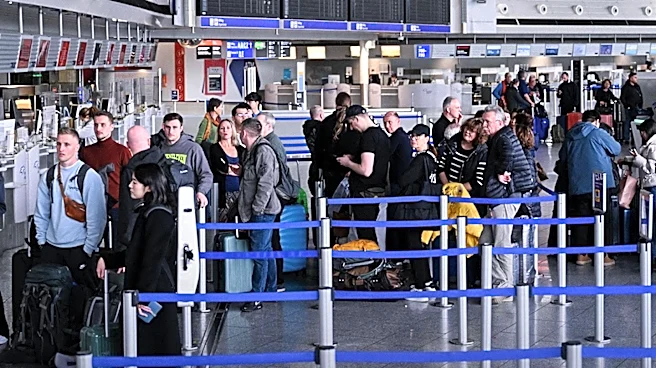
Passengers at Boston's Logan Airport were left stranded due to a nationwide ground stop that halted air travel across the United States. The abrupt freeze in flights disrupted travel plans for countless individuals, including Peter and Maria Silletti,
who were attempting to fly to North Carolina for their daughter's college cheerleading final game. Many passengers, like the Sillettis, resorted to alternative travel methods such as renting cars for long drives. Nick Benton, another stranded passenger, faced the possibility of missing his grandfather's funeral in Florida. The flight status boards at Logan Airport showed numerous delays and cancellations, leading to frustration and uncertainty among travelers. Governor Maura Healey stated she had been briefed on the situation and was seeking answers from federal officials.
Why It's Important?
The nationwide ground stop at Logan Airport and other U.S. airports underscores the fragility of the national air travel infrastructure and its significant impact on personal and economic activities. Such widespread disruptions can lead to substantial financial losses for airlines, airports, and related businesses, as well as considerable inconvenience and stress for travelers. For individuals, missing critical events like family emergencies, business meetings, or personal milestones can have lasting emotional and professional consequences. The incident also highlights the need for robust contingency plans and effective communication systems within the aviation sector to mitigate the effects of unforeseen events and ensure public confidence in air travel. The involvement of state officials like Governor Maura Healey indicates the broad governmental concern over such disruptions.
What's Next?
Following the ground stop, flights are expected to resume, but widespread delays and cancellations will likely persist as airlines work to re-route passengers and reposition aircraft. Travelers are advised to check with their respective airlines for updated flight information. Federal officials will likely conduct a review to understand the cause of the ground stop and implement measures to prevent similar occurrences in the future. This could involve examining air traffic control systems, communication protocols, and cybersecurity measures. Airlines will face the challenge of managing customer service and compensation for affected passengers, potentially leading to increased operational costs and reputational impacts.
Beyond the Headlines
Beyond the immediate travel chaos, a nationwide ground stop can trigger broader discussions about the resilience of critical national infrastructure. It raises questions about the potential vulnerabilities of air traffic control systems to technical glitches, cyber threats, or other unforeseen events. Such incidents can also influence public perception of air travel reliability and potentially shift travel behaviors, with some individuals opting for alternative modes of transportation for future trips. The event may also prompt a re-evaluation of federal funding and investment in modernizing air traffic control technology to enhance safety and efficiency, ensuring the smooth operation of the nation's airspace.