




What's Happening?
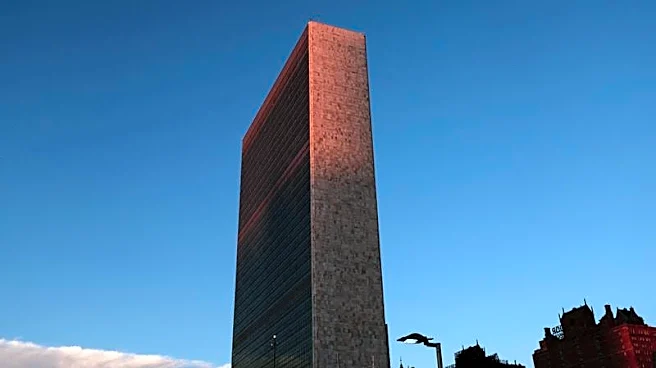
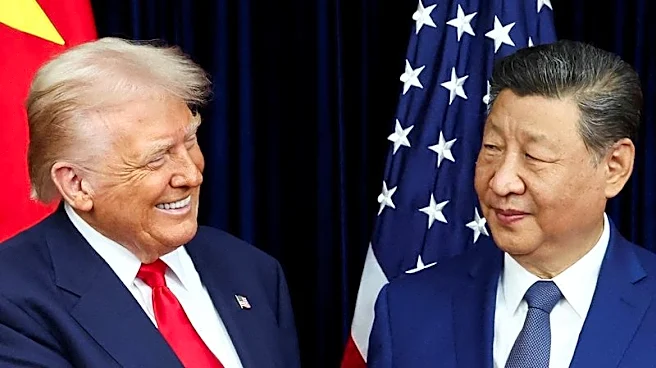
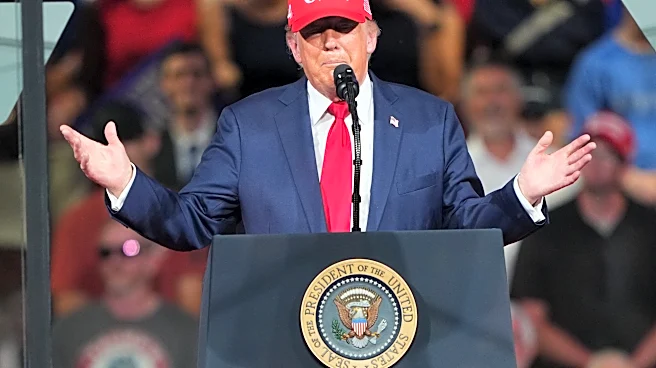
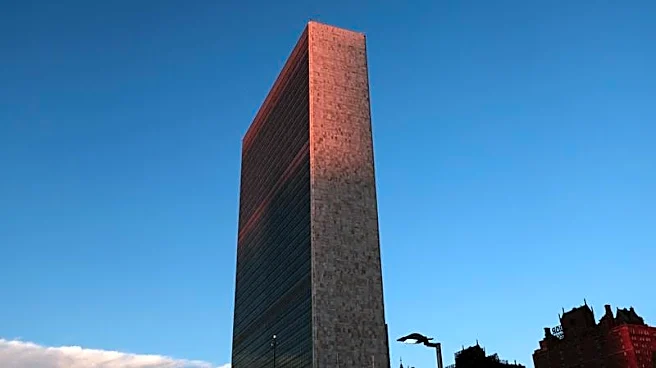
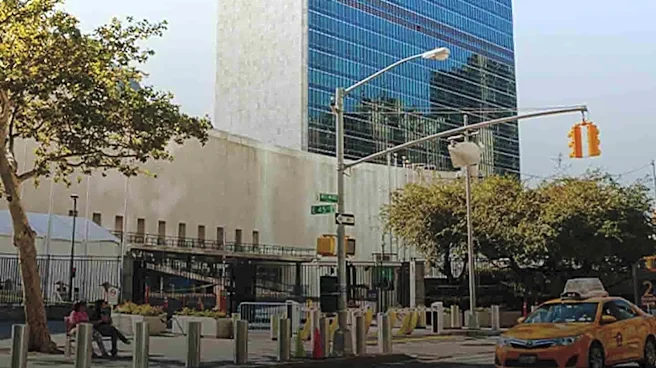
President Trump is scheduled to host the traditional reception for world leaders attending the 81st United Nations General Assembly in New York City. This event will take place on Tuesday evening, following the arrival of Portuguese Prime Minister Luís
Montenegro in New York. The reception is a customary gathering where the U.S. President welcomes heads of state and government participating in the annual UN debate. The 81st General Assembly's theme is 'Restoring Trust, Managing Transformation,' and it marks the final session with António Guterres as the UN Secretary-General. Prime Minister Montenegro's agenda in New York also includes a visit to the Stock Exchange, where he will ring the closing bell, and the inauguration of a Portuguese filigree jewelry store.
Why It's Important?
The reception hosted by President Trump for world leaders at the UN General Assembly is a significant diplomatic event. It provides an informal setting for international leaders to interact, potentially fostering dialogue and strengthening bilateral relations outside the formal UN sessions. For the U.S., hosting such an event underscores its role as a global convener and its commitment to multilateral diplomacy, even amidst varying international dynamics. The presence of numerous heads of state offers an opportunity for the U.S. to engage on critical global issues, from climate action to international security. These interactions can influence future policy decisions and international cooperation, impacting U.S. foreign policy objectives and its standing on the global stage. The event also serves as a platform for leaders to network and address shared challenges, contributing to the broader international discourse.
What's Next?
Following the reception, world leaders will continue their participation in the 81st UN General Assembly, engaging in various high-level meetings, debates, and bilateral discussions. Prime Minister Montenegro, for instance, is scheduled to meet with UN Secretary-General António Guterres and participate in an initiative on Climate Action and Just Transition. He will also deliver a speech at the high-level session of the General Assembly. The outcomes of these discussions and interactions at the UN General Assembly could lead to new international agreements, resolutions, or collaborative efforts on pressing global issues. The U.S. will likely continue to engage with its allies and other nations to advance its diplomatic agenda and address global challenges, with the reception serving as an initial point of contact for many of these engagements.
Beyond the Headlines
Beyond the immediate diplomatic exchanges, the President's reception at the UN General Assembly carries symbolic weight, representing the ongoing importance of multilateral institutions and international cooperation in addressing complex global issues. In an era marked by geopolitical shifts and challenges to the international order, such gatherings provide a crucial forum for dialogue and consensus-building. The event also highlights the intricate balance between national interests and collective global responsibilities. The informal nature of the reception can sometimes facilitate more candid conversations and breakthroughs than formal diplomatic channels, potentially laying the groundwork for future collaborations on issues ranging from economic stability to humanitarian crises. The U.S. hosting this event reinforces its historical role in shaping global governance and its continued influence in international affairs.