







What's Happening?
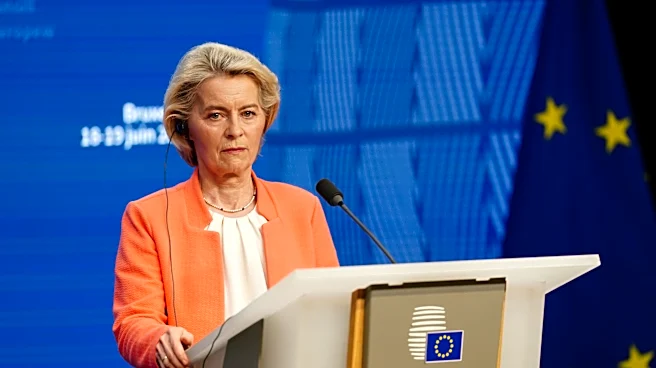
The European Union (EU) has issued a general statement at the UN General Assembly's 1st Committee, emphasizing the critical need for the Comprehensive Nuclear-Test-Ban Treaty (CTBT) to enter into force. The EU highlighted that the risk of a return to nuclear
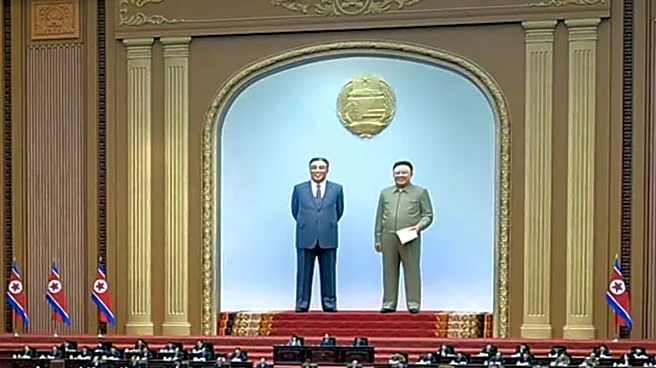
weapons testing has never been greater, citing North Korea's six nuclear tests and Russia's revocation of its CTBT ratification. The EU calls on Russia to reverse this decision and respect the Treaty's objectives. Despite being signed by 188 states and ratified by 179, the CTBT has not yet entered into force, preventing the use of crucial on-site inspections for verification. The EU urges the nine remaining Annex II States to sign and ratify the CTBT without delay.
Why It's Important?
The EU's strong stance on CTBT ratification is vital for global non-proliferation efforts and international peace and security, directly impacting U.S. foreign policy objectives. The failure of the CTBT to enter into force weakens the international norm against nuclear testing, potentially encouraging other states to develop or test nuclear weapons. For the U.S., which has signed but not ratified the CTBT, this situation presents a complex diplomatic challenge. Russia's withdrawal from ratification further complicates the geopolitical landscape, increasing the risk of a new arms race and undermining efforts to reduce nuclear threats. The EU's call for universal adherence underscores the collective responsibility to prevent nuclear proliferation and maintain global stability, aligning with U.S. interests in a secure world.
What's Next?
The EU will continue to advocate for the CTBT's universalization and early entry into force at every opportunity, including during the current UN General Assembly session. Diplomatic pressure will likely be exerted on the nine remaining Annex II States whose ratification is essential for the Treaty to become legally binding. The U.S. will face renewed calls to ratify the CTBT, which could become a significant foreign policy debate. The international community will also closely monitor Russia's actions and North Korea's nuclear program, as any further tests or withdrawals could severely destabilize global non-proliferation efforts. Efforts to strengthen monitoring and verification capabilities of the CTBTO will also continue.
Beyond the Headlines
Beyond the immediate diplomatic and security implications, the CTBT debate touches upon the fundamental principles of international law and collective security. It highlights the fragility of multilateral agreements in the face of geopolitical tensions and the challenges of achieving consensus on critical global issues. The EU's statement also implicitly raises questions about the role of nuclear weapons in modern deterrence theory and the ethical imperative to prevent their use. The ongoing struggle to bring the CTBT into force reflects a broader tension between national sovereignty and international cooperation, influencing the future of arms control and the pursuit of a world free from nuclear testing.