





What's Happening?
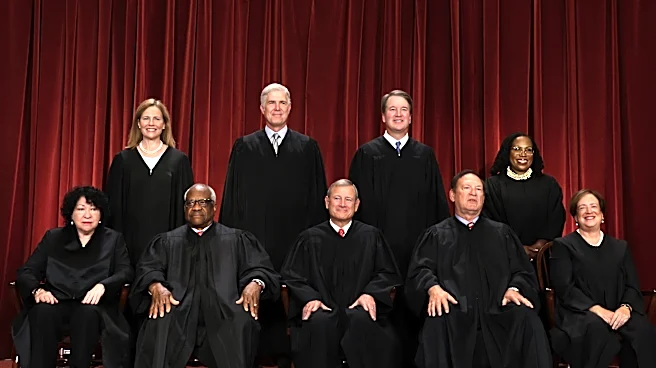
The U.S. Supreme Court has recently struck down limits on how much individual candidates can coordinate their spending with national political parties. This decision is expected to significantly impact the financial dynamics of Senate races across the country.
Previously, coordinated expenditures for Senate races were capped, but now, national committees can spend unlimited funds in coordination with political campaigns. This change could benefit Republican candidates, who typically receive more funding from large corporate donors through national committees, compared to Democrats who often rely on small individual donations. The ruling comes as Democrats hold a cash advantage in several competitive Senate races, including North Carolina, Ohio, and Texas. However, the removal of spending caps may level the playing field, allowing Republicans to bolster their fundraising efforts in these battleground states.
Why It's Important?
The Supreme Court's decision could reshape the landscape of campaign finance in U.S. politics, particularly in Senate races. By allowing unlimited coordinated spending, the ruling may enhance the influence of national political committees, potentially favoring Republicans who have historically raised more from large donors. This could alter the competitive balance in key battleground states, where Democrats currently have a fundraising edge. The decision also raises concerns about the role of money in politics, as it may increase the power of wealthy donors and national committees in shaping election outcomes. The ruling could have significant implications for the upcoming elections, affecting strategies and resource allocation for both parties.
What's Next?
Following the Supreme Court ruling, political parties are likely to adjust their campaign strategies to leverage the new financial landscape. Republican committees may increase their spending in coordination with individual campaigns, potentially enhancing their advertising and outreach efforts. Democrats, while initially disadvantaged by the ruling, may also seek to capitalize on the ability to coordinate spending with national committees. The Federal Communications Commission's rules on campaign advertising rates could become a focal point, as parties navigate the implications of the ruling on media buys. The decision may prompt further legal and regulatory discussions on campaign finance and its impact on electoral fairness.
Beyond the Headlines
The Supreme Court's decision highlights ongoing debates about campaign finance reform and the influence of money in politics. Critics argue that the ruling could exacerbate existing inequalities in political influence, favoring candidates with access to wealthy donors and national committee support. The decision may also prompt discussions about the ethical implications of unlimited coordinated spending and its potential to undermine democratic processes. As parties adapt to the new rules, the long-term effects on political campaigns and voter engagement remain uncertain, raising questions about the future of campaign finance regulation.