
What's Happening?
The Demilitarized Zone (DMZ) separating North and South Korea, established after the 1953 armistice of the Korean War, has inadvertently transformed into a significant wildlife sanctuary. Despite being
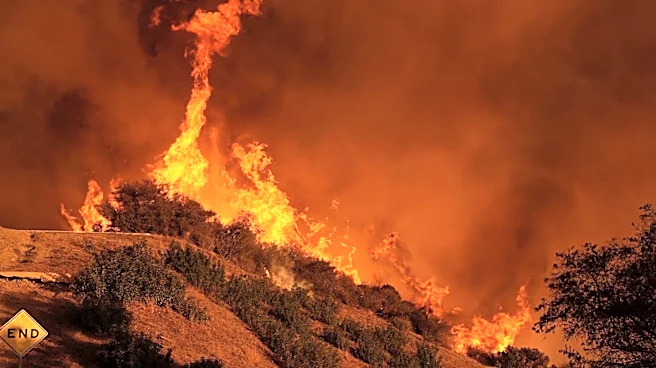
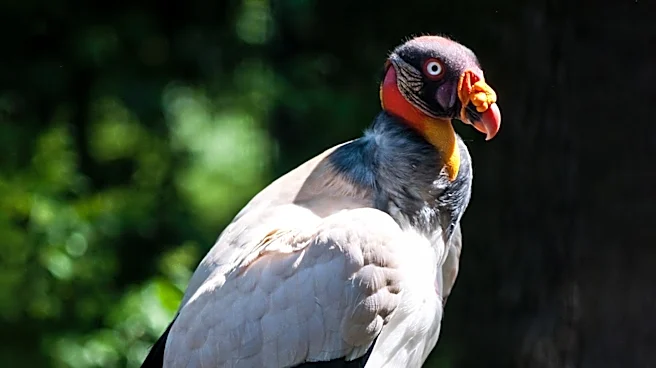
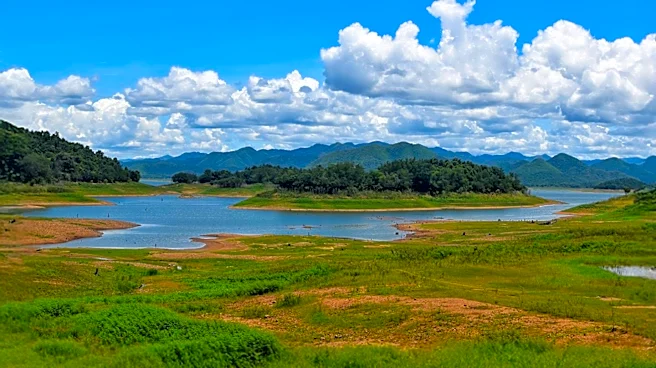
one of the most heavily fortified borders globally, the severe restriction on human access for over 70 years has allowed nature to reclaim much of the 155-mile-long, 2.5-mile-wide strip of land. Surveys conducted in and around the DMZ have identified 6,168 species, including 102 of the Korean Peninsula’s 267 endangered species. This includes musk deer, leopard cats, Asiatic black bears, and seven of the world’s 15 crane species, such as the endangered red-crowned and white-naped cranes. The traditional rice paddies and marshes within the zone have become crucial stopping points for migratory birds, especially as wetlands disappear elsewhere in East Asia. While military activity, fires, and landmines still impact the landscape, the overall human isolation has fostered a unique environment for biodiversity to flourish.
Why It's Important?
The ecological transformation of the DMZ highlights a paradoxical outcome of prolonged geopolitical conflict: the creation of an invaluable natural preserve. This accidental sanctuary offers a unique case study for conservationists, demonstrating how the absence of human development can lead to significant biodiversity recovery, even in a militarily active zone. The presence of numerous endangered species underscores the DMZ's critical role in regional and global conservation efforts. The situation also presents a complex dilemma for future inter-Korean relations; while peace is desired, conservationists express concern that reconciliation could lead to infrastructure development and commercial exploitation, potentially destroying the very isolation that allowed wildlife to thrive. This raises important questions about balancing peace and economic development with environmental preservation in post-conflict scenarios, offering lessons for other regions facing similar challenges.
What's Next?
The future of the DMZ's unique ecosystem is intrinsically linked to the evolving political landscape between North and South Korea. Any significant improvement in relations could lead to discussions about the zone's future use, potentially pitting development interests against conservation goals. Researchers are currently studying the ecological features within the DMZ, such as traditional rice paddies, to understand how these simple elements contribute to biodiversity and whether they could be replicated to restore nature beyond the border. Conservation organizations and ecological institutes, like the DMZ Ecology Research Institute, will likely continue to advocate for the protection of this area, regardless of political shifts. International attention may also grow, potentially leading to proposals for the DMZ to be recognized as a UNESCO World Heritage site or a transboundary peace park, aiming to preserve its ecological value while fostering cooperation.
Beyond the Headlines
The DMZ's evolution into a biodiversity hotspot offers a profound commentary on humanity's impact on the natural world. It illustrates that while human conflict can devastate, the cessation of human encroachment, even under hostile conditions, can allow nature to recover remarkably. This accidental sanctuary challenges conventional notions of protected areas, as its preservation stems not from deliberate conservation policy but from political stalemate. The irony of a war-created buffer zone becoming a haven for peace-loving wildlife underscores the interconnectedness of geopolitical stability and ecological health. It also prompts deeper ethical considerations about the value placed on natural heritage versus economic and political integration, particularly in regions with a history of division. The DMZ stands as a stark reminder that nature often thrives in the spaces humans abandon, offering a unique perspective on resilience and adaptation in both ecological and geopolitical contexts.