





What's Happening?
Cambridge City Manager Yi-An Huang has formally rejected a proposal from the Massachusetts Water Resources Authority (MWRA) to permanently fence off 2.3 acres of Magazine Beach. Huang labeled the plan as “not a viable proposal,” criticizing the MWRA for not informing
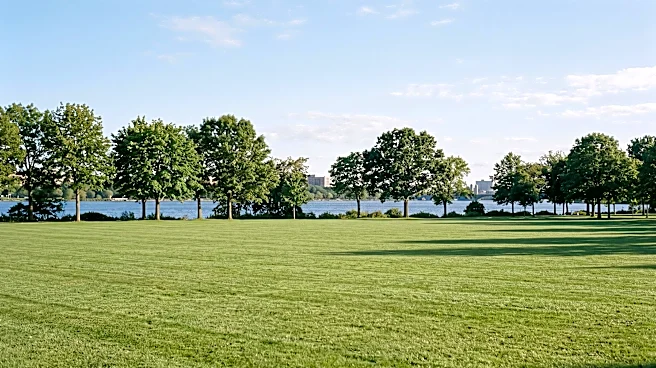
city officials that an underground sewer storage tank project would necessitate the permanent loss of recreational space. The proposed project involves constructing a 10.1-million-gallon underground storage tank beneath the park’s playing fields as part of a broader $1.3 billion regional effort to reduce combined sewer overflows. This infrastructure, dating back to the 19th century, currently discharges a mixture of sewage and stormwater into nearby waterways during heavy rainfall. The MWRA's presentation indicated a permanent footprint of approximately 2.3 acres, with an additional six acres required for construction staging over an estimated six years. Residents and local officials, including State Rep. Mike Connolly, expressed outrage, particularly after it became clear during a public meeting that the area above the tank would be permanently fenced off, a detail not explicitly stated in initial presentation materials.
Why It's Important?
This rejection highlights a significant conflict between essential infrastructure development and the preservation of public recreational spaces in urban areas. The MWRA's project aims to address a critical environmental issue by reducing sewage overflows into the Charles River, which has direct implications for public health and ecosystem integrity. However, the proposed permanent loss of parkland at Magazine Beach has sparked strong community and political opposition, underscoring the challenge of balancing environmental goals with community access to green spaces. The situation also raises questions about transparency and communication from public authorities regarding the full impact of large-scale projects. The need for legislative approval, requiring a two-thirds vote from both chambers of the state Legislature, indicates the high political stakes and the potential for this local dispute to escalate to a state-level debate on land use and environmental policy. The outcome could set a precedent for how similar infrastructure projects are planned and implemented in other densely populated U.S. cities.
What's Next?
Cambridge City Manager Yi-An Huang and State Rep. Mike Connolly have urged the MWRA to explore alternative solutions that would maintain public access to Magazine Beach. These alternatives include relocating the proposed tank to nearby parking lots or property owned by MIT, or redesigning the tank to allow for the restoration of recreational space above the underground facility. Residents have until October 30 to submit their comments on the MWRA’s draft plan, which includes the proposed location and design of the Magazine Beach tank. The project's progression will depend heavily on whether the MWRA can present a revised plan that addresses community concerns and gains the necessary political support. State Rep. Connolly has stated that the current proposal would be “dead on arrival” at the state Legislature, indicating a significant hurdle for the MWRA. The Massachusetts Department of Conservation and Recreation, which owns the park, and the state Legislature would need to approve any permanent loss of protected parkland under Article 97 of the Massachusetts Constitution.
Beyond the Headlines
The controversy surrounding Magazine Beach extends beyond a simple land-use dispute, touching upon deeper issues of environmental justice and community empowerment. Magazine Beach serves as a vital recreational hub for residents across various income levels, particularly those in Cambridgeport and Riverside who may lack private outdoor spaces. The potential permanent loss of this parkland could disproportionately affect these communities, raising ethical concerns about equitable access to public amenities. The incident also highlights a broader tension between top-down infrastructure planning and grassroots community input. The residents' strong reaction and the subsequent political opposition suggest a growing demand for more inclusive decision-making processes in urban development. This case could influence future public works projects by emphasizing the importance of early and transparent communication, as well as the need for agencies to genuinely consider community well-being and alternative solutions that minimize negative impacts on public spaces.