







What's Happening?
Archaeologists have utilized modern diagnostic imaging technology to identify one of the victims of the Pompeii eruption as a Roman doctor. This discovery was made in the Garden of Fugitives, a site where 14 individuals were found preserved in volcanic
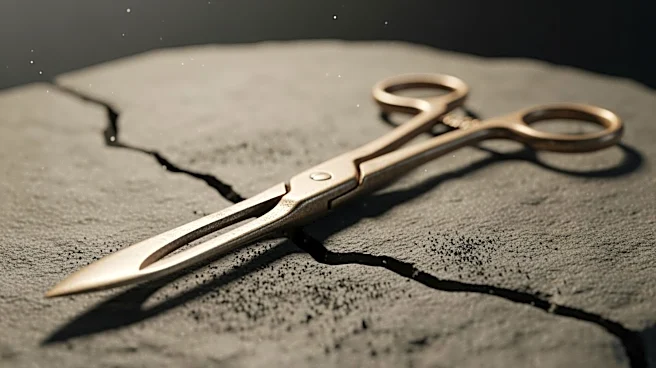
pumice. The technique involved using CT scans to non-invasively examine the plaster casts of the victims, revealing that the doctor was carrying a medical case with surgical tools and coins. This finding adds a significant piece to the understanding of daily life in Pompeii and the tragic events that unfolded during the eruption.
Why It's Important?
The identification of a Roman doctor among the victims of Pompeii provides valuable insights into the professional lives and societal roles of individuals in ancient Rome. It highlights the advanced medical practices of the time and offers a poignant reminder of the human stories behind historical events. This discovery not only enriches the historical narrative of Pompeii but also demonstrates the potential of modern technology to uncover new information from ancient sites, thereby enhancing our understanding of history and archaeology.
What's Next?
Researchers plan to virtually recreate the medical kit of the Pompeii doctor using the data collected from the scans. This virtual reconstruction will allow for a more detailed study of the medical tools and practices of the time. Additionally, the ongoing use of advanced imaging techniques at Pompeii is expected to continue revealing new findings, contributing to the broader understanding of Roman society and the impact of the volcanic eruption.