








What's Happening?
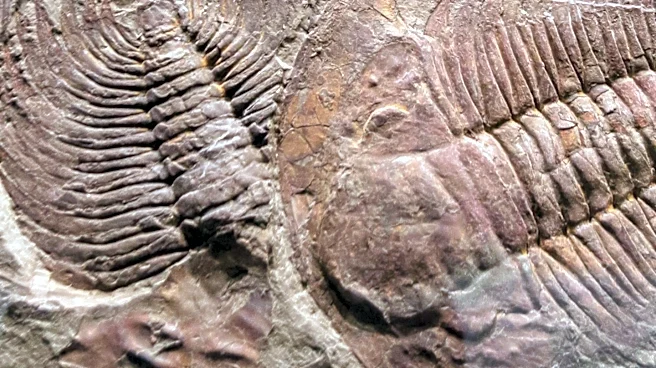
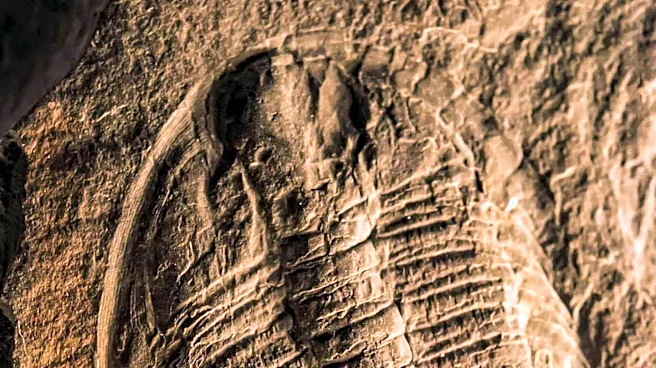
Researchers have discovered that Spriggina floundersi, a wormlike creature from the Ediacaran Period, exhibited right-handedness, making it the earliest known animal with this trait. The fossils, found in South Australia, show that these creatures, which
lived about 550 million years ago, had a tendency to bend to the right. This discovery was made after examining over 100 fossils, revealing that the majority of the specimens curved left in the rock, indicating a rightward bend in life. This suggests that Spriggina had a nervous system capable of directional movement, a trait shared by many modern animals.
Why It's Important?
The discovery of right-handedness in Spriggina floundersi provides valuable insights into the evolution of behavioral traits in animals. This finding suggests that directional preference, a characteristic seen in many modern species, has deep evolutionary roots. Understanding these early behavioral traits can help scientists trace the development of complex nervous systems and movement patterns in animals. This research also highlights the importance of paleontological studies in uncovering the origins of traits that are prevalent in contemporary animal species, including humans.