





What's Happening?
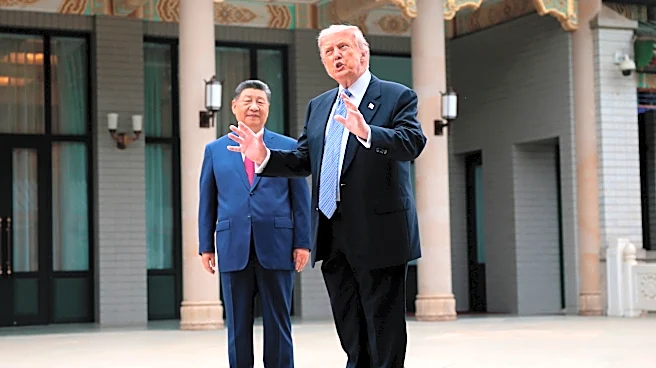
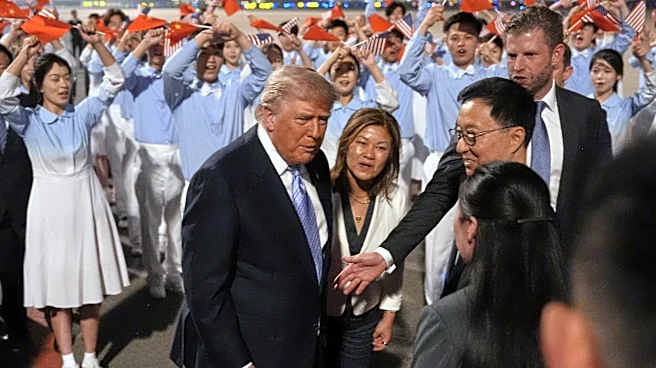
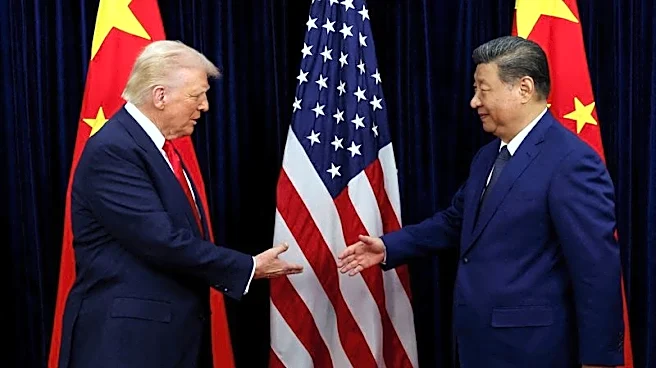
President Trump has described the relationship between the United States and China as 'very strong' following a summit with Chinese President Xi Jinping in Beijing. During the meeting, Trump highlighted that he and Xi have managed to resolve numerous
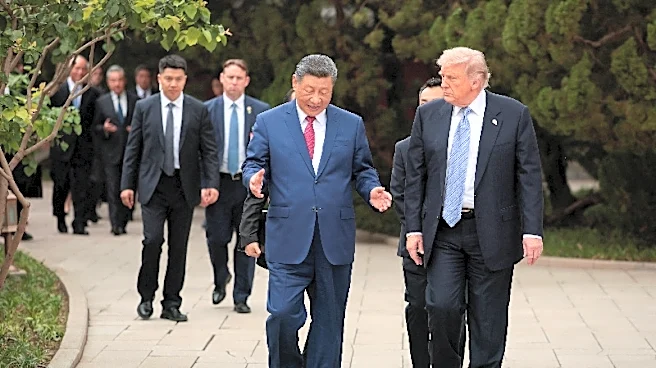
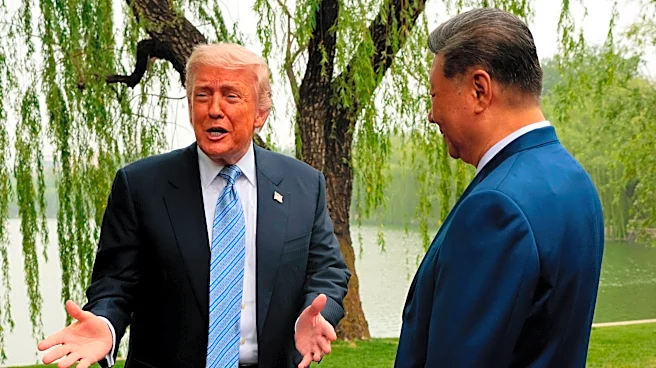
issues that others could not. The summit, held at the Zhongnanhai Garden, marked the culmination of Trump's visit to China, where he emphasized the personal rapport he has developed with Xi over nearly 12 years. Trump praised the outcomes of the summit, noting that significant progress was made on various fronts, including trade and international security. Both leaders expressed a shared desire to prevent Iran from acquiring nuclear weapons and to keep the Strait of Hormuz open for trade. The meeting also included discussions on future trade agreements, although specific details were not disclosed.
Why It's Important?
The strengthening of US-China relations is significant given the global economic and political influence of both nations. Improved ties could lead to more stable international trade, benefiting global markets and potentially easing tensions in regions like the South China Sea. The summit's outcomes may also influence US domestic policy, particularly in areas related to trade and foreign policy. For businesses and investors, a strong US-China relationship could mean more predictable market conditions and opportunities for growth. However, the broader geopolitical implications, such as the handling of North Korea and Iran, remain critical areas where US-China cooperation could have far-reaching effects.
What's Next?
Looking ahead, President Trump has invited Xi Jinping to visit Washington later in the year, where further discussions are expected to take place. This visit could solidify the agreements made during the Beijing summit and potentially lead to new trade deals. The international community will be watching closely to see how these developments impact global trade dynamics and geopolitical stability. Additionally, the US administration may face domestic scrutiny over the specifics of any agreements reached, particularly from those concerned about the economic impact of US-China trade relations.