








What's Happening?
The Transportation Security Administration (TSA) has introduced a new pilot program called Gateside by TSA PreCheck, which allows approved, non-ticketed visitors to pass through security checkpoints at 13 U.S. airports. This initiative marks a partial
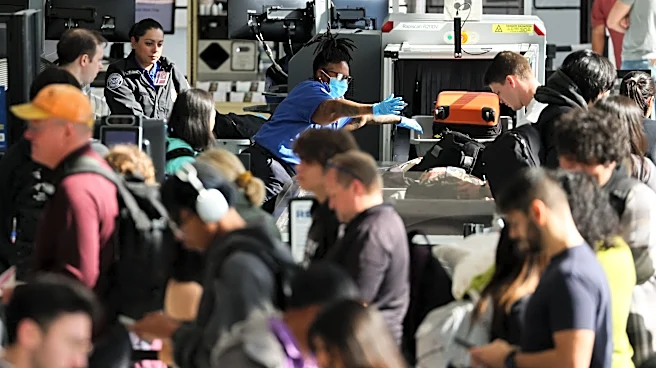
reversal of the stringent airport security measures implemented after the September 11, 2001, terrorist attacks, which largely restricted access beyond security to ticketed passengers. Under the Gateside program, individuals with TSA PreCheck benefits or a Known Traveler Number can apply for a Gateside pass one to three days before their planned visit. If approved, they can use the TSA PreCheck screening lane with valid identification. This pass does not permit boarding an aircraft but allows visitors to accompany passengers to gates, meet arriving passengers, and access post-security shops and restaurants. The program aims to enhance the airport experience for families and those assisting travelers, while still requiring all participants to undergo full TSA screening.
Why It's Important?
This program represents a significant shift in post-9/11 airport security policy, reflecting a balance between security imperatives and passenger convenience. For families, it restores the ability to spend more time with loved ones before flights, which can be particularly beneficial for those traveling with young children, elderly parents, or individuals needing assistance. Economically, allowing more non-ticketed visitors into secure areas could boost revenue for airport concessions, including restaurants and retail stores, which have primarily served only ticketed passengers for over two decades. The pilot nature of the program indicates the TSA's cautious approach, allowing them to evaluate its impact on security checkpoint efficiency and overall airport operations before potential wider implementation. This move could also foster a more positive public perception of air travel, making it a less stressful experience for many.
What's Next?
The TSA will closely monitor the Gateside program's performance at the 13 participating airports. This evaluation will focus on how the increased number of non-ticketed visitors affects security wait times, operational flow, and overall security effectiveness. Feedback from airport authorities, passengers, and visitors will be crucial in determining the program's future. If successful, the TSA may consider expanding Gateside to more airports across the U.S. or refining its protocols. Conversely, if significant operational challenges or security concerns arise, the program could be modified or even discontinued. Stakeholders, including airport operators, airlines, and concessionaires, will be keenly observing the pilot's outcomes, as it could influence future airport design and service offerings.
Beyond the Headlines
The Gateside program touches upon deeper societal and psychological aspects of air travel. The post-9/11 restrictions fundamentally altered the airport experience, creating a more sterile and less communal environment. This new program attempts to reintroduce a human element, allowing for more personal goodbyes and welcomes, which can alleviate travel-related anxieties and foster a sense of connection. Ethically, it raises questions about the balance between security and personal freedom, and how technology and trusted traveler programs can facilitate this balance. The program also highlights the evolving nature of security protocols, demonstrating that policies are not static but can adapt to changing threats and societal needs. It signifies a potential long-term shift towards more personalized and flexible security measures, leveraging pre-vetted traveler programs to enhance both safety and convenience.