




What's Happening?
Democratic Congressman Tim Kennedy, representing Buffalo and Niagara Falls, New York, has voiced strong criticism regarding President Trump's approach to U.S.-Canada relations. In an August 31 news release, Kennedy stated that Americans are facing difficulties
affording essential goods like groceries and housing, yet the President is engaging in 'petty fights' with Canada, the nation's closest ally. This statement comes in the context of a broader dispute, including President Trump's executive order to rename Lake Ontario 'Lake America' and ongoing trade tensions between the two countries. The controversy was further highlighted by a Michigan CEO, Jane Smith, who posted an AI-generated image of her family wearing 'Lake America' sweatshirts while traveling to Halifax, leading to significant backlash and an early return home for her family due to alleged death threats. Smith later apologized, clarifying the image was a joke and AI-generated, and that the sweatshirts were not real.
Why It's Important?
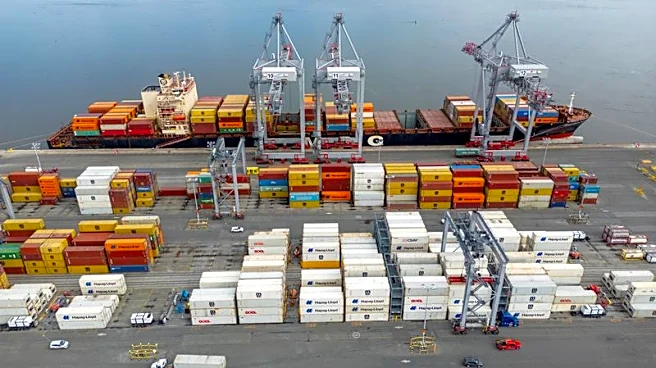
Congressman Kennedy's remarks underscore growing concerns among U.S. lawmakers about the potential negative impact of strained U.S.-Canada relations on American citizens and the economy. Canada is the largest trading partner of the U.S., and any disruption in this relationship can have significant economic consequences, particularly for border communities like Buffalo and Niagara Falls, which Kennedy represents. The 'petty fights' he refers to, such as the symbolic renaming of Lake Ontario and trade disputes, could lead to retaliatory measures from Canada, affecting cross-border trade, tourism, and the livelihoods of many Americans. The incident with the Michigan tourist further illustrates the public's sensitivity to these diplomatic tensions, demonstrating how political rhetoric can quickly escalate into real-world social friction and even threats, impacting individuals and businesses. This situation highlights the delicate balance required in international diplomacy, especially with close allies, to avoid exacerbating domestic economic challenges.
What's Next?
The ongoing tensions between the U.S. and Canada, as highlighted by Congressman Kennedy, suggest that diplomatic efforts will be crucial to de-escalate the situation. Three members of Congress have already introduced a bill titled 'Hands off our Great Lakes' aimed at preventing President Trump's proposed renaming of Lake Ontario, indicating legislative action is being pursued to counter the executive order. The public reaction to incidents like the 'Lake America' sweatshirt controversy may also prompt a re-evaluation of communication strategies from both sides. Future developments could include further legislative debates on trade policies and environmental protections concerning shared natural resources, as well as continued public discourse on the nature of U.S.-Canada relations. The incident also raises questions about the responsible use of AI in public communication and the potential for misinformation to fuel international misunderstandings.
Beyond the Headlines
The controversy surrounding the 'Lake America' incident and Congressman Kennedy's comments reveal deeper implications regarding national identity, diplomatic respect, and the role of digital media in international relations. The symbolic renaming of a shared natural resource like Lake Ontario touches upon issues of sovereignty and mutual respect between nations, particularly for Canada, which views such actions as disrespectful. The swift and intense public backlash against the Michigan tourist, even for an AI-generated image, highlights the emotional and nationalistic sentiments tied to these issues. It also brings to the forefront the ethical considerations of using AI for humor or satire in a politically charged environment, demonstrating how easily digital content can be misinterpreted and lead to real-world consequences, including threats and apologies. This event serves as a stark reminder of the interconnectedness of political rhetoric, public perception, and the digital landscape in shaping international dynamics.