


What's Happening?
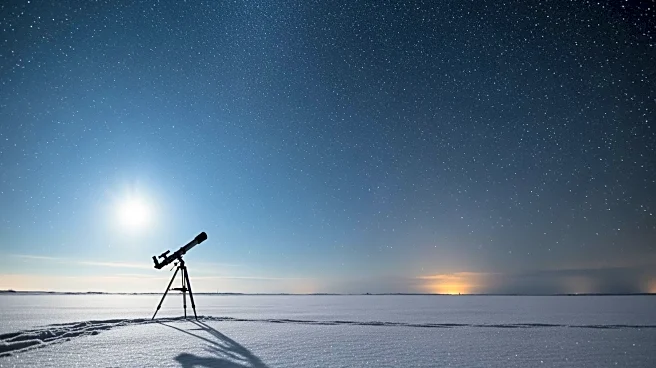
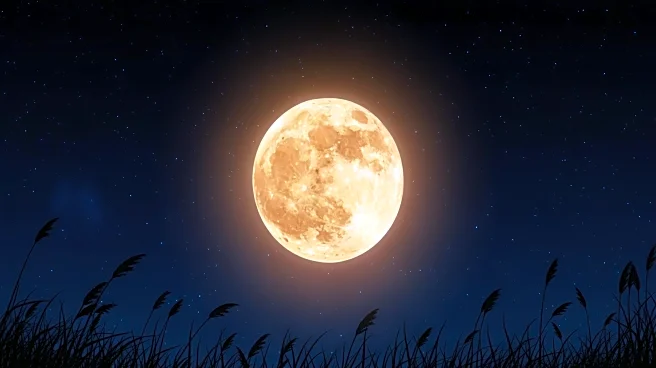
On March 29, the Moon will be prominently visible in the constellation Leo, near the Sickle asterism. Earlier in the day, the Moon passed close to Regulus, Leo's alpha star, and by nightfall, it will be positioned approximately 3.5 degrees east of Regulus.
Regulus, shining at magnitude 1.4, is located nearly on the ecliptic, the path along which the Sun, Moon, and planets travel. The Sickle of Leo, an asterism resembling a backward question mark, is outlined by several stars including Eta Leonis, Gamma Leo, Zeta Leo, Mu Leo, and Epsilon Leo. This celestial arrangement offers a striking view for astronomy enthusiasts, as the Moon's proximity to these stars highlights the constellation's features.
Why It's Important?
This astronomical event provides a unique opportunity for stargazers and astronomers to observe the Moon's interaction with the constellation Leo. The visibility of the Moon near Regulus and the Sickle asterism enhances the understanding of celestial movements and the ecliptic path. Such events are significant for educational purposes, allowing observers to learn more about the positioning and brightness of stars within constellations. Additionally, it fosters public interest in astronomy, encouraging people to engage with the night sky and appreciate the natural phenomena occurring above.
What's Next?
As the Moon continues its journey across the sky, it will move away from Leo and towards other constellations. Observers can look forward to future celestial events, such as planetary alignments and meteor showers, which will offer more opportunities for sky watching. Astronomy organizations may schedule public viewing events or educational sessions to capitalize on these occurrences, promoting awareness and understanding of astronomical science.
Beyond the Headlines
The Moon's passage through Leo not only serves as a visual spectacle but also contributes to ongoing research in astronomy. Observations made during such events can aid in refining models of celestial mechanics and understanding the dynamics of the ecliptic. Furthermore, it highlights the cultural significance of constellations, which have been used for navigation and storytelling throughout history, enriching the human connection to the cosmos.