





What's Happening?
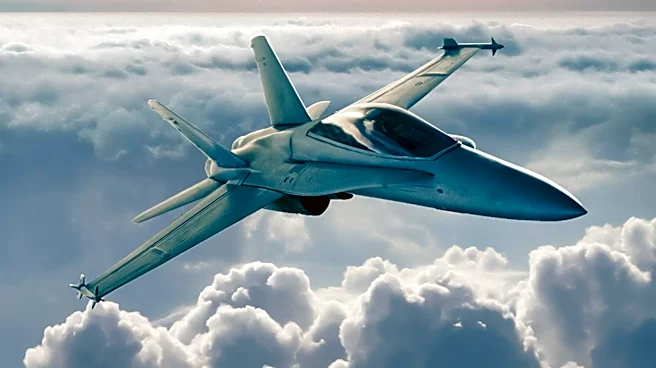
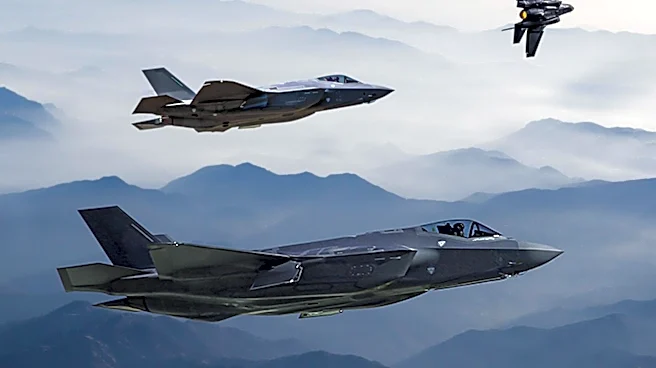
South Korea has officially completed the development of its first homegrown KF-21 fighter jet, a project that began in 2015 with the aim of replacing the country's aging fleet of U.S.-made F-4 and F-5 jets. The Defense Acquisition Program Administration
(DAPA) announced the completion, marking a significant milestone in South Korea's defense capabilities. The project, which cost approximately 8.8 trillion won (US$6.04 billion), saw the rollout of the first KF-21 prototype in April 2021. The fighter jet has successfully passed the final combat suitability review, meeting all performance requirements. Over 1,600 flight trials have been conducted without any accidents. The first batch of 40 KF-21 jets is expected to be delivered to the Air Force by 2028, with an additional 80 aircraft to be produced by 2032.
Why It's Important?
The completion of the KF-21 fighter jet project is a significant achievement for South Korea, as it enhances the country's self-reliant defense capabilities. This development reduces South Korea's dependency on foreign military technology and strengthens its position in the global defense market. The project also represents a technological advancement for the country, showcasing its ability to develop sophisticated military equipment. The KF-21 jets are expected to bolster South Korea's air defense capabilities, providing a modern replacement for its outdated fleet. This move could have implications for regional security dynamics, particularly in the context of tensions on the Korean Peninsula.
What's Next?
DAPA plans to deliver the first batch of KF-21 fighter jets to the Air Force by 2028, with further production to continue until 2032. The focus will be on enhancing the capabilities of the aircraft, including air-to-air combat features. The successful deployment of these jets could lead to increased interest from other countries in South Korea's defense technology, potentially opening up new markets for export. Additionally, the project may encourage further investment in domestic defense research and development, fostering innovation and technological growth within the country.