





What's Happening?
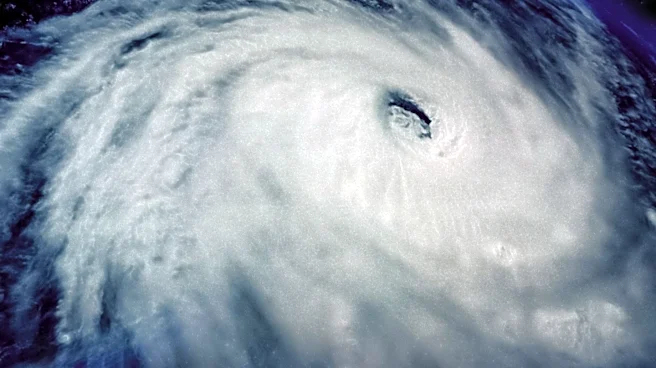
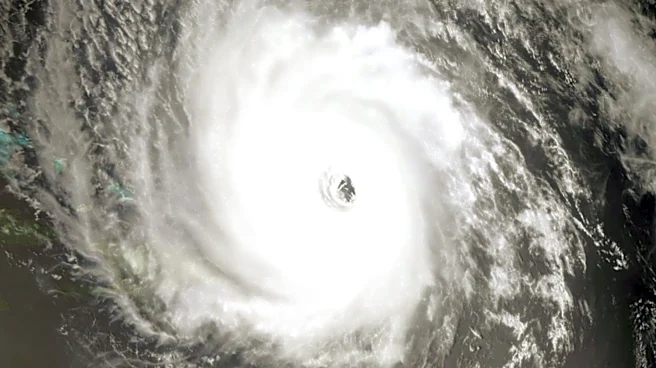
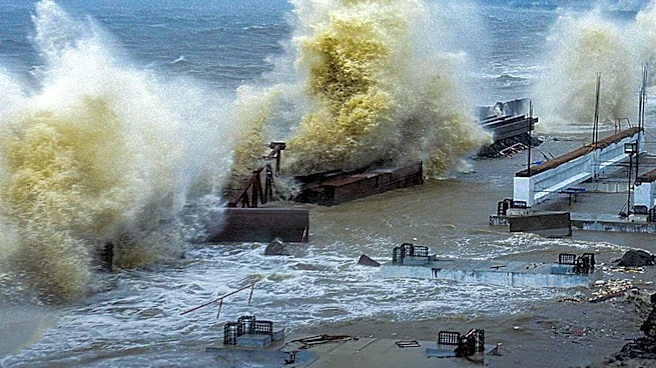
Typhoon Dolphin has led to the evacuation of more than a million people in eastern China, particularly affecting the Zhejiang province and Shanghai. The storm, which made landfall with significant force, has caused record rainfall and widespread flooding.
In Shanghai, nearly 313mm of rain was recorded in a 24-hour period, marking the highest rainfall in over 150 years. The storm has disrupted transportation, leading to the cancellation of over 1,300 flights and the suspension of many local train services. Authorities have maintained an orange alert for heavy rain, warning of potential flooding and landslides as the storm moves northward.
Why It's Important?
The impact of Typhoon Dolphin highlights the increasing frequency and intensity of extreme weather events, which scientists attribute to global warming. The extensive evacuations and disruptions in major cities like Shanghai underscore the vulnerability of urban areas to climate-related disasters. The economic implications are significant, with transportation and business operations severely affected. The situation also raises concerns about the preparedness and resilience of infrastructure in the face of such natural calamities, prompting a reevaluation of disaster response strategies in densely populated regions.
What's Next?
As Typhoon Dolphin continues to move inland, authorities are on high alert for further flooding and landslides. The storm's trajectory suggests that it will affect additional provinces, necessitating ongoing evacuation efforts and emergency responses. The Chinese government is likely to implement more stringent measures to mitigate the storm's impact, including reinforcing infrastructure and enhancing early warning systems. The situation may also prompt international discussions on climate change and the need for global cooperation in addressing its effects.