








What's Happening?
The Alaska School District (ASD) has successfully completed a four-year transition, expanding its new student nutrition service model to all 57 elementary schools. This initiative moves away from a decades-old pre-packaged lunch system to a choice-based
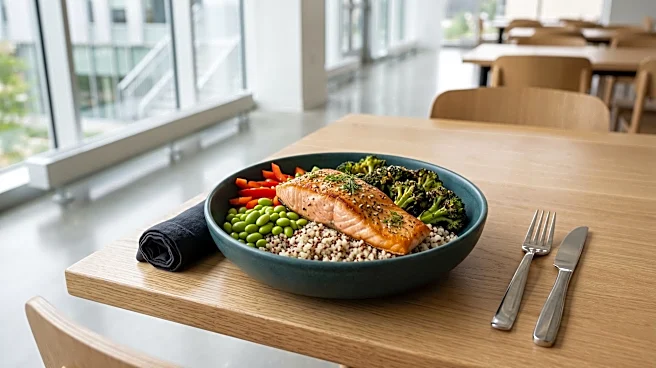
model that emphasizes scratch cooking and local sourcing. Marcie McGill, ASD’s student nutrition senior director, stated that the previous system led to increased waste and reduced food quality. Under the new model, students serve themselves from bulk, open-tray stations, allowing them to choose or decline individual items. Chef Daniel Smith, executive chef and culinary logistics assistant director, highlights a creative culinary philosophy, focusing on what children enjoy and are not typically exposed to. The central kitchen now prepares items like pizza dough, marinara sauce, and fajita vegetable mix from scratch. The district serves over 20,000 breakfast and lunch meals daily, totaling 3.6 million meals last year. A new menu item, a Copper River salmon bowl, is being tested for middle and high school students.
Why It's Important?
This transformation in the ASD's school lunch program is significant for several reasons. Research conducted in partnership with the University of Alaska Anchorage and Merrimack College indicates that students are eating 30% more of both the entrée and vegetables under the new model, suggesting improved nutritional intake. McGill emphasizes that this program is a student success strategy, not merely a nutrition initiative, citing national research that shows consistent participation in school lunches can improve academic outcomes, equivalent to an additional two and a half months of schooling per year. The focus on scratch cooking and local sourcing not only enhances food quality and reduces waste but also introduces students to a wider variety of fresh, healthy options. This approach could serve as a model for other school districts nationwide looking to improve student health, academic performance, and food sustainability.
What's Next?
The ASD will continue to refine and implement its expanded school lunch program across all schools. The district is actively recruiting culinary professionals to join its team, indicating a sustained commitment to the new model. Families needing financial assistance for meals can apply for free and reduced-price options through the ASD website, ensuring equitable access to the improved food service. The ongoing testing of new menu items, such as the Copper River salmon bowl, suggests a continuous effort to innovate and cater to student preferences while maintaining nutritional standards. The success of this program may inspire other school districts to adopt similar strategies, potentially leading to a broader shift in how school meals are prepared and served across the U.S., with a greater emphasis on fresh, locally sourced, and appealing options for students.
Beyond the Headlines
The ASD's initiative goes beyond simply providing meals; it represents a fundamental shift in the perception and delivery of school nutrition. By involving students in the selection process and offering appealing, freshly prepared food, the district is fostering healthier eating habits and reducing food waste. This approach also has broader implications for local economies by prioritizing local sourcing, which can support regional farmers and businesses. The emphasis on 'thinking like a child' in menu development, as described by Chef Smith, highlights a pedagogical approach to food, aiming to expand children's palates and expose them to diverse culinary experiences. This could lead to a generation of students with a better understanding of nutrition and a greater appreciation for fresh, wholesome food, potentially influencing long-term public health outcomes and food culture.