





What's Happening?
France has issued a warning to its citizens, urging them to leave Mali immediately following a series of coordinated attacks by separatist fighters and Islamist militants. The French government has also advised against any travel to the West African nation,
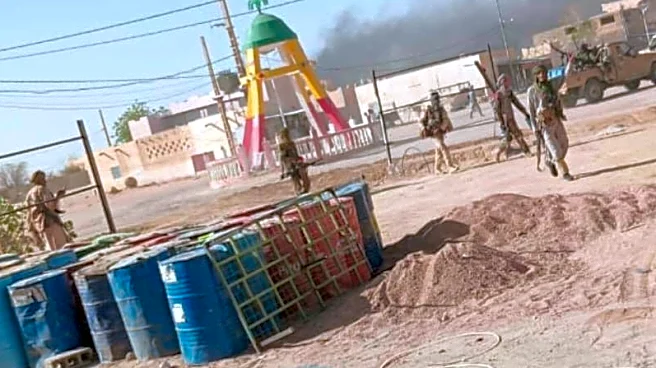
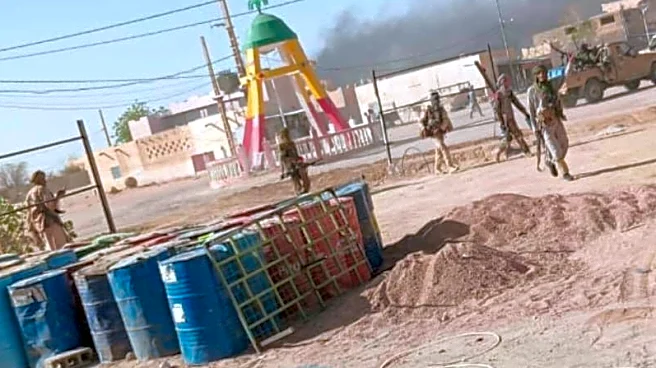
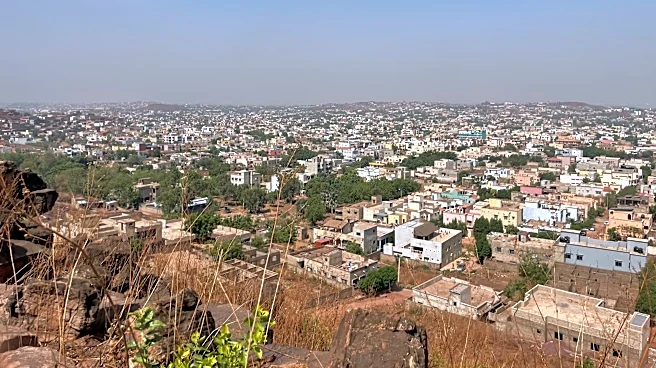
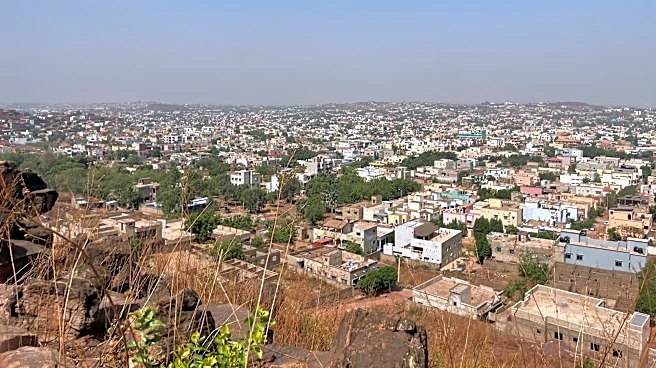
citing the situation as 'extremely volatile.' Over the weekend, Mali experienced explosions and sustained gunfire across the country, including in the capital, Bamako. In a significant incident, the defense leader Sadio Camara was killed in Kati due to a suicide bombing by militants. Additionally, separatist forces have taken control of the city of Kidal in the north. Despite these developments, Mali's military leader, General Assimi Goïta, has stated that the security situation is under control.
Why It's Important?
The escalation of violence in Mali poses significant risks not only to the safety of French citizens but also to regional stability in West Africa. France's decision to urge its citizens to leave highlights the severity of the security threats posed by both separatist and Islamist groups. This situation could further strain France's diplomatic relations with Mali, especially after the withdrawal of French forces and the subsequent hiring of Russian mercenaries by the Malian junta. The ongoing instability may also impact international efforts to combat terrorism in the Sahel region, potentially leading to increased insurgency activities and humanitarian crises.
What's Next?
The immediate focus for France will likely be on ensuring the safe evacuation of its citizens from Mali. Meanwhile, the international community, including the United States, may seek to engage with the Malian junta to address the security challenges and explore diplomatic solutions. The situation could prompt discussions on the role of foreign military presence in Mali and the broader Sahel region, as well as the effectiveness of current strategies to combat insurgency and restore stability.