
What's Happening?
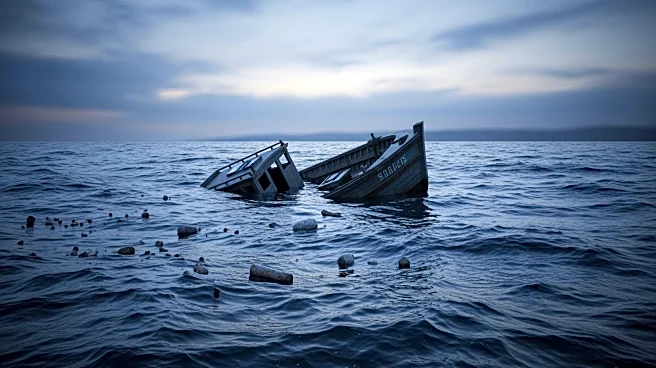
A tragic incident occurred off the coast of Libya where a rubber boat carrying 55 migrants capsized, resulting in 53 individuals being reported dead or missing. The International Organization for Migration
(IOM) reported that the boat had departed from Zawiya and overturned near Zuwara. Only two Nigerian women survived the ordeal, with one losing her husband and the other her two babies. This incident is part of a larger crisis in the Central Mediterranean, where over 1,300 migrants went missing in 2025. The region has seen numerous 'invisible' shipwrecks, exacerbated by extreme weather conditions. In January alone, at least 375 migrants were reported dead or missing. Libya remains a critical transit point for migrants attempting to reach Europe, often facing perilous journeys across the desert and Mediterranean Sea.
Why It's Important?
The ongoing migrant crisis in the Central Mediterranean highlights the severe risks faced by individuals fleeing conflict and poverty. The high number of deaths and disappearances underscores the urgent need for international intervention and improved safety measures for migrants. This situation also reflects broader geopolitical issues, including instability in Libya and the lack of safe migration routes. The humanitarian implications are significant, as many migrants are subjected to inhumane conditions and exploitation. The crisis affects not only the migrants and their families but also poses challenges for European countries dealing with migration flows. Addressing these issues requires coordinated efforts from international organizations, governments, and NGOs to ensure the safety and rights of migrants.
What's Next?
In response to the ongoing crisis, there may be increased calls for international cooperation to enhance search and rescue operations in the Mediterranean. European countries might face pressure to provide more support for migrants and to address the root causes of migration, such as conflict and poverty in countries like Libya. Additionally, there could be discussions on implementing more robust policies to prevent human trafficking and improve the conditions in migrant detention centers. The international community may also explore diplomatic solutions to stabilize regions contributing to the migration crisis.
Beyond the Headlines
The migrant crisis in the Mediterranean has broader implications for international relations and human rights. It raises ethical questions about the responsibility of nations to protect vulnerable populations and the effectiveness of current migration policies. The situation also highlights the need for sustainable development and conflict resolution in regions that are major sources of migration. Long-term solutions may involve addressing economic disparities and political instability in these areas to reduce the need for dangerous migration routes.