







What's Happening?
Lexington Mayor Linda Gorton has announced the appointment of Allison Connelly and Timothy Johnson as co-chairs of an independent, external panel. This panel is tasked with reviewing the city's use of automated license plate reader (ALPR) technology.
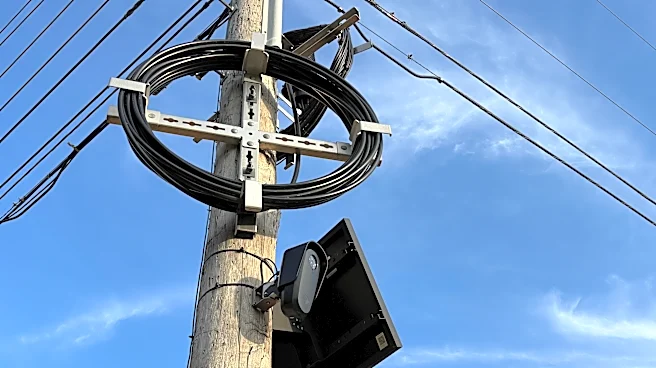
Connelly, an attorney and University of Kentucky College of Law professor emeritus, and Johnson, President and CEO of the Greater Clark Foundation, will lead the review to ensure the technology aligns with best practices and community needs. Mayor Gorton emphasized that the panel's focus is not on the Lexington Police Department, which she stated has a strong program with strict governance and audits for ALPR use. The city has already engaged with the local Human Rights Commission, NAACP, and ACLU in setting up the program. The ALPRs in Lexington capture single images of license plates, basic vehicle descriptions, and location data, without video, facial recognition, or remote adjustment capabilities, and are not used for traffic enforcement.
Why It's Important?
The establishment of an independent panel to review ALPR technology in Lexington is a significant step towards addressing public concerns about privacy and surveillance in the digital age. While Mayor Gorton highlighted the technology's effectiveness in solving violent crimes, recovering stolen vehicles, and locating missing persons—citing 32 missing persons located, over $5.5 million in stolen vehicles recovered, 166 weapons seized, and 821 people charged with various crimes since March 2022—she also acknowledged the questions raised locally and nationally regarding its use. This initiative aims to foster transparency and build public trust by objectively evaluating the technology's implementation and impact. The panel's recommendations could lead to policy adjustments, vendor changes, or other actions that set a precedent for how municipalities balance public safety with civil liberties, influencing the broader adoption and regulation of surveillance technologies across the U.S.
What's Next?
Mayor Gorton expects to appoint the remaining members of the independent panel within the current month. Once fully constituted, the panel will commence its review of Lexington's ALPR technology. Their mandate includes examining best practices, evaluating potential improvements, and considering whether a new vendor should be sought or if other actions are necessary. The panel's findings and recommendations will be crucial in shaping the future of ALPR use in Lexington, potentially leading to enhanced oversight, revised policies, or technological upgrades. This process is designed to remove politics from the discussion and focus on factual assessments, ensuring that the technology serves community needs while upholding privacy standards. The outcome could influence public perception and policy debates surrounding surveillance technologies in other U.S. cities.
Beyond the Headlines
The review of ALPR technology in Lexington delves into the complex ethical and societal implications of pervasive surveillance. While proponents emphasize its utility in crime prevention and resolution, critics often raise concerns about potential for misuse, data security, and the erosion of privacy rights. The Mayor's emphasis on taking 'politics out of this discussion' and focusing on 'facts' highlights the challenge of navigating public perception and misinformation surrounding such technologies. The panel's work could contribute to a national dialogue on developing robust frameworks for accountability and transparency in the deployment of advanced surveillance tools. It also underscores the evolving nature of privacy expectations in public spaces, where technologies like ALPRs collect vast amounts of data, prompting questions about data retention, access, and the balance between collective security and individual freedoms.