





What's Happening?
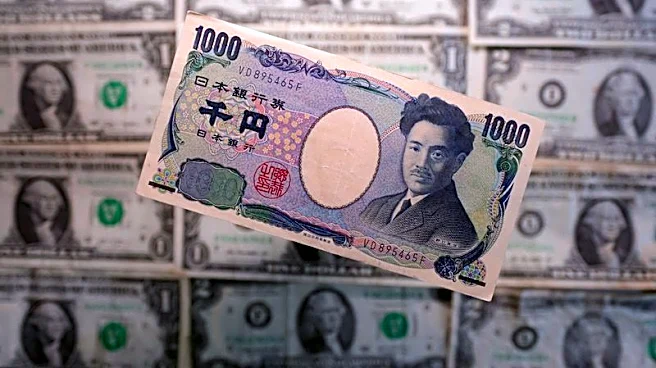
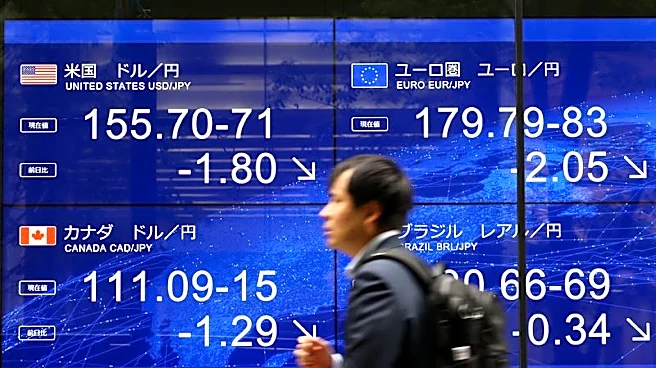
The U.S. has intervened in the foreign exchange market to support the Japanese yen, which has hit a 40-year low. Unusually, the intervention involved selling euros instead of dollars to purchase yen. This marks the first coordinated yen purchase by the U.S. and
Japan since the 1998 Asian financial crisis. The intervention aims to stabilize the yen, which has been declining due to Japan's monetary policy and fiscal challenges. However, experts warn that using euros could undermine the intervention's effectiveness, as it may confuse markets and fail to address the yen's fundamental issues.
Why It's Important?
The U.S. intervention in the yen market highlights the complexities of global currency management and the challenges of stabilizing exchange rates. The decision to use euros instead of dollars raises questions about the strategy's effectiveness and could lead to market uncertainty. This move reflects broader economic and geopolitical considerations, as the U.S. seeks to support Japan, a key ally, amid economic pressures. The intervention also underscores the interconnectedness of global financial markets and the potential ripple effects of currency fluctuations on international trade and investment.
What's Next?
The effectiveness of the intervention will depend on Japan's ability to address the underlying causes of the yen's weakness, such as its monetary policy and fiscal challenges. If the yen continues to decline, further interventions may be necessary, potentially involving more traditional methods like selling dollars. The situation will be closely monitored by financial markets, as any missteps could lead to increased volatility and impact investor confidence. The U.S. and Japan may need to coordinate further to ensure a stable and effective response to the currency challenges.