







What's Happening?
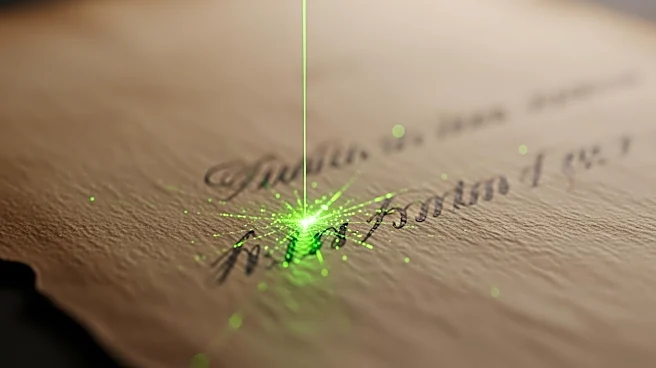
A study published in npj Heritage Science details how researchers have used green laser pulses to remove ink from century-old paper while preserving the underlying cellulose fibers. The research involved artificially contaminating aged paper samples with
commercial stamp ink and then using a pulsed nanosecond Nd:YAG laser to clean the ink. The study focused on optimizing laser parameters to ensure effective ink removal without damaging the paper. The laser cleaning process was analyzed using optical and scanning electron microscopy, as well as chemical composition assessments, to evaluate the impact on the paper's surface and mechanical properties.
Why It's Important?
This research offers a promising method for the conservation of historical documents, which are often at risk of degradation due to ink and other contaminants. By using laser technology, conservators can potentially restore valuable paper artifacts without the risk of chemical damage associated with traditional cleaning methods. This technique could be particularly beneficial for preserving cultural heritage and historical records, ensuring that they remain accessible for future generations. Additionally, the study's findings could lead to advancements in the field of document conservation, providing new tools and methodologies for preserving a wide range of paper-based materials.