









What's Happening?
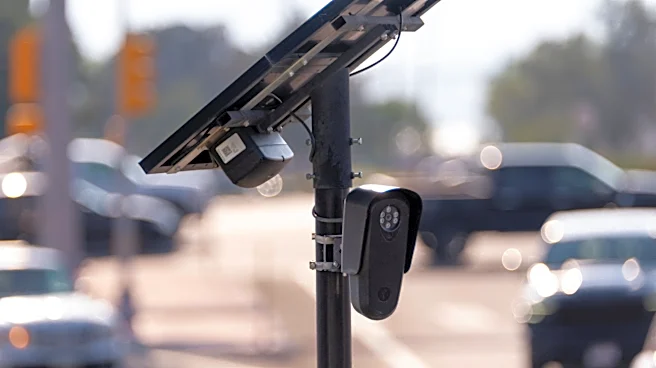
Governor Dan McKee of Rhode Island has issued a directive for all municipalities in the state to temporarily halt the installation and activation of new automatic license plate reader (ALPR) cameras, including those from Flock. This pause is in effect
while the state conducts a comprehensive 60-day review of the technology. The primary objective of this review, according to Governor McKee, is to establish uniform statewide standards for the use of ALPRs and the management of the data they collect. During this review period, the Rhode Island State Police are permitted to continue operating their existing Flock cameras under their current guidelines. The review process will involve key stakeholders, including Rhode Island State Police Colonel Darnell Weaver, the Rhode Island Leagues of Cities and Towns, and the Rhode Island Police Chiefs' Association, with recommendations expected by mid-October.
Why It's Important?
This statewide review of ALPR technology is important due to the ongoing national debate surrounding privacy versus public safety. Proponents, including various police departments in Rhode Island, argue that ALPRs are invaluable tools for solving crimes, citing instances such as the recovery of abducted children. Conversely, critics contend that these cameras represent a significant invasion of privacy, as highlighted by a recent incident in New Bedford where an officer allegedly misused the technology. The establishment of statewide standards aims to create a consistent framework that balances law enforcement needs with civil liberties, preventing a patchwork of regulations across different municipalities. This initiative could set a precedent for other states grappling with similar issues, influencing how such surveillance technologies are governed nationwide. The outcome will directly impact how law enforcement agencies operate and how citizens' data is protected.
What's Next?
Following Governor McKee's order, municipalities across Rhode Island will maintain a pause on new ALPR installations and activations. The 60-day review, involving the Rhode Island State Police, the Rhode Island Leagues of Cities and Towns, and the Rhode Island Police Chiefs' Association, is expected to conclude by mid-October. Upon completion, this group will issue recommendations for statewide standards governing the use of ALPR technology and data handling. Governor McKee has also indicated his intention to collaborate with legislators once they reconvene to codify these recommended standards into law. This legislative action would ensure that the established guidelines are legally binding and uniformly applied throughout the state, providing a clear framework for the future deployment and operation of automatic license plate readers.
Beyond the Headlines
The debate over ALPRs in Rhode Island touches upon fundamental questions regarding the scope of government surveillance and individual privacy rights in the digital age. Beyond the immediate concerns of crime-solving and privacy invasion, the establishment of statewide guidelines could influence public trust in law enforcement and technology. A transparent and well-regulated system might foster greater acceptance of ALPRs, while a perceived overreach could lead to increased public scrutiny and legal challenges. This initiative also highlights the broader challenge of adapting existing legal frameworks to rapidly evolving technologies. The codification of standards by legislators will not only address current concerns but also lay the groundwork for how future surveillance technologies are integrated into society, potentially shaping the balance between security and freedom for years to come.