








What's Happening?
Ascension Saint Thomas and Lifepoint Rehabilitation, a division of Lifepoint Health, have commenced construction on the Ascension Saint Thomas Rutherford Rehabilitation Hospital. This new inpatient rehabilitation facility aims to broaden access to specialized
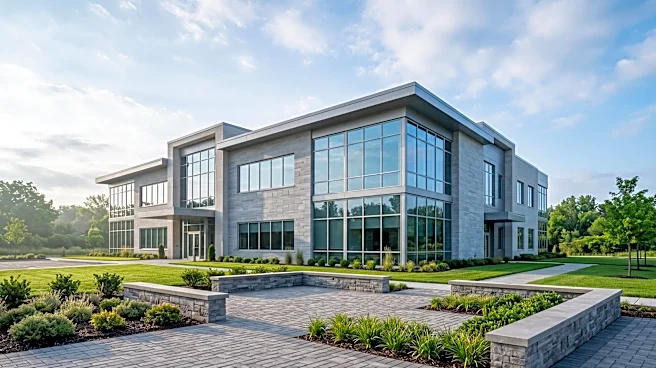
rehabilitation services for residents in Rutherford County and the surrounding Central Tennessee region. The hospital, a two-story structure spanning approximately 62,700 square feet, will be situated on a four-acre plot near Ascension Saint Thomas Rutherford hospital. It will initially feature 40 private patient rooms, with provisions for a future expansion of an additional 10 beds. Lifepoint Rehabilitation will manage the hospital through its joint venture with Ascension Saint Thomas. The facility is designed to provide intensive inpatient rehabilitation for individuals recovering from severe illnesses and injuries, including a dedicated 12-bed unit for acquired brain injuries, a physical therapy gym, and an outdoor therapy courtyard. This development addresses the growing healthcare needs of one of Tennessee's fastest-growing regions.
Why It's Important?
This new rehabilitation hospital is significant for several reasons. It will enhance access to critical specialized rehabilitation care for patients in Central Tennessee, reducing the necessity for them to travel to Nashville or other distant locations for treatment. This proximity allows patients to remain closer to their families and support networks during recovery, which can be crucial for their well-being. The collaboration between Ascension Saint Thomas, a long-standing healthcare provider in the region, and Lifepoint Rehabilitation, known for its clinical and operational expertise in rehabilitation, is expected to deliver high-quality, individualized care. Furthermore, the hospital is projected to create approximately 85.7 full-time equivalent positions in its first year, including clinical and nonclinical roles, thereby contributing to local employment and economic growth. The integration of medical records and provider collaboration between the new facility and Ascension Saint Thomas Rutherford will also ensure a more seamless transition of care for patients moving from acute care to rehabilitation.
What's Next?
Construction of the Ascension Saint Thomas Rutherford Rehabilitation Hospital is anticipated to conclude in late 2027, at which point the facility will become operational and begin admitting patients. Following its opening, the hospital will focus on providing intensive inpatient rehabilitation services, particularly for those recovering from strokes, brain injuries, spinal cord injuries, orthopedic injuries, neurological conditions, amputations, and trauma. The facility's design allows for a future expansion of 10 additional beds, indicating potential growth in its capacity to serve more patients as regional needs evolve. The joint venture between Ascension Saint Thomas and Lifepoint Rehabilitation will continue to oversee the hospital's operations, aiming to integrate its services with the broader healthcare network in Central Tennessee to ensure continuity of care and optimal patient outcomes. The creation of new jobs will also lead to recruitment and training efforts in the coming years.
Beyond the Headlines
The establishment of this new rehabilitation hospital reflects a broader trend in healthcare towards specialized, community-based care models that aim to keep patients closer to home during recovery. This approach not only improves patient convenience and family involvement but also potentially reduces the overall burden on larger, more centralized medical centers. The dedicated acquired brain injury unit highlights a growing recognition of the specific and complex needs of patients with neurological conditions, emphasizing tailored therapeutic environments. This project also underscores the increasing prevalence of joint ventures between established hospital systems and specialized rehabilitation providers, leveraging respective strengths to deliver comprehensive care. Such partnerships can lead to more efficient resource allocation and the development of state-of-the-art facilities that might be challenging for a single entity to develop independently, ultimately enhancing the healthcare infrastructure in rapidly growing regions.