



What's Happening?
The death toll from the deadly flash flooding in the Grand Canyon in late August has risen to three, following the identification of the remains of the last missing hiker, Timothy Allen Smith. Smith, a 53-year-old pilot from western Wyoming's Star Valley,
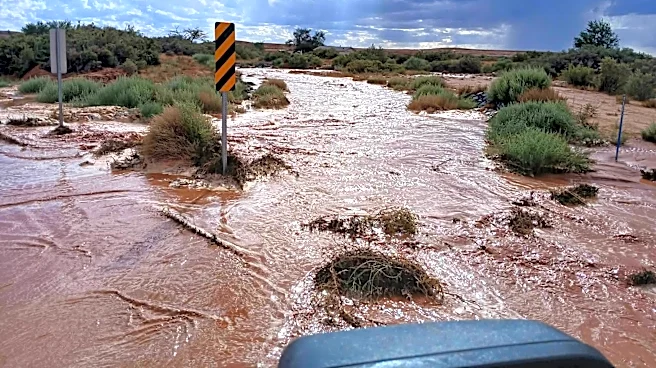
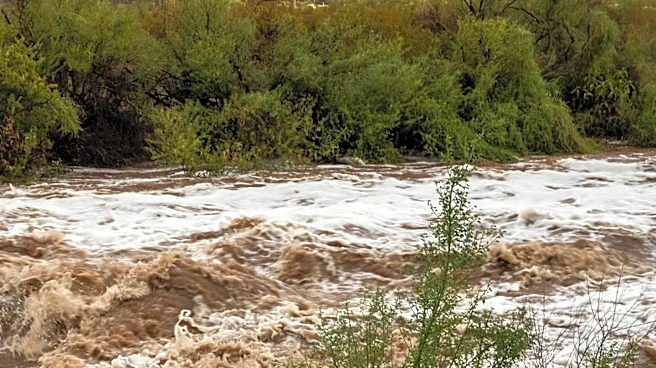
was found near Crystal Rapids on the Colorado River. His remains were discovered on Monday, and his wife, Carrie Smith, confirmed the identification on Thursday. Smith was on a multi-day hiking, fishing, and camping trip with two companions, Brent Rosenkranz and John Giusti, both from Granbury, Texas, whose remains were found earlier. The flooding occurred during the summer monsoon season, which can cause sudden and intense deluges in the desert landscape, funneling water into previously dry gulleys and canyons. The event also damaged the water pipeline serving the South Rim, impacting park operations.
Why It's Important?
This tragic event highlights the inherent dangers of natural phenomena, particularly flash floods, in arid and semi-arid regions like the Grand Canyon. It underscores the critical need for visitors to be aware of weather conditions and park advisories, especially during monsoon seasons. The damage to the water pipeline serving the South Rim also reveals the vulnerability of essential infrastructure in national parks to extreme weather events. This disruption affects not only tourism but also the operational capacity of the park, impacting millions of visitors and residents. The incident serves as a stark reminder of the power of nature and the importance of preparedness and rapid response in remote and challenging environments, emphasizing the risks associated with outdoor recreational activities in such areas.
What's Next?
Grand Canyon National Park officials are continuing to assess damage from the recent floods, including a subsequent flash flood along Bright Angel Creek and the Colorado River. Efforts are underway to restore a reliable water supply to the canyon, with expectations that this will be achieved in weeks rather than months. Many hiking trails and lodging areas remain closed, and visitors are advised to bring their own water or filtration devices for inner canyon access. The park will likely continue to implement and refine its flash flood warning systems and emergency response protocols to enhance visitor safety. This incident may also prompt further discussions and investments in infrastructure resilience within national parks to better withstand the impacts of increasingly unpredictable weather patterns.
Beyond the Headlines
Beyond the immediate tragedy, this event brings to light broader issues concerning climate change and its potential impact on national parks and outdoor recreation. The increased frequency and intensity of extreme weather events, such as flash floods, could pose growing challenges for park management, visitor safety, and infrastructure maintenance. The mention of rain falling on a North Rim burn area from a 2025 wildfire suggests a compounding effect, where previous environmental damage exacerbates the impact of new natural disasters. This raises questions about long-term strategies for managing national parks in the face of a changing climate, including fire prevention, ecosystem restoration, and adaptation of infrastructure. It also underscores the delicate balance between allowing public access to natural wonders and ensuring the safety of visitors in increasingly volatile environments.