






What's Happening?
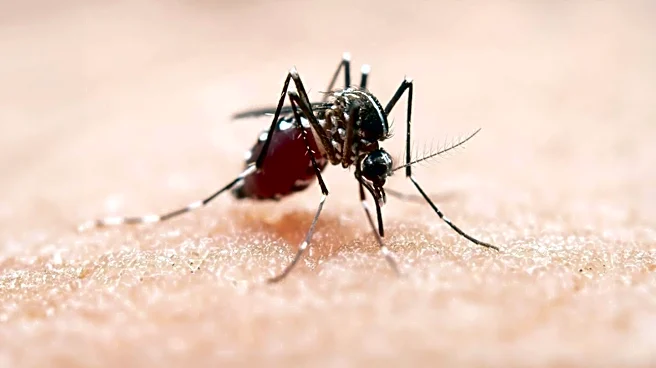
The Aedes aegypti mosquito, also known as the yellow fever mosquito, is a significant daytime feeder and a highly effective vector for diseases such as dengue fever, Zika, chikungunya, and yellow fever. Unlike many other mosquito species that are active
at night, Aedes aegypti is most active during the early morning and late afternoon. This species has adapted to human environments, often living indoors or near homes, and preferentially targets human ankles and feet. Female Aedes aegypti can lay eggs in minimal amounts of standing water, even as little as a bottle cap full, making their eradication challenging. While native to Africa, these mosquitoes have spread globally and are now a concern in U.S. states like Texas, Florida, and California, which have temperate climates and large human populations.
Why It's Important?
The aggressive feeding habits and adaptability of the Aedes aegypti mosquito pose a substantial public health threat in the United States. Its ability to transmit multiple severe viruses, particularly dengue fever, which saw a record 14 million cases globally in 2024, makes its presence a critical concern. The mosquito's preference for human blood and its capacity to breed in tiny water sources mean that traditional control methods are often insufficient. The spread of these diseases into U.S. states highlights the need for robust public health interventions, including community education on eliminating breeding sites and personal protection measures. The economic impact could include increased healthcare costs and potential disruptions to tourism in affected regions.
What's Next?
Public health experts are employing various strategies to combat the spread of Aedes aegypti, including the sterile insect technique, which involves releasing sterilized male mosquitoes, and the Wolbachia technique, which introduces bacteria to limit virus replication and egg hatching. Citizens are encouraged to take preventative measures such as emptying standing water from containers weekly, covering water barrels, cleaning gutters, and using CDC-recommended repellents like Picaridin, IR3535, and 2-undecanone. Continued research and implementation of these and other innovative control methods will be crucial to managing mosquito populations and preventing disease outbreaks in the U.S.
Beyond the Headlines
The challenge posed by the Aedes aegypti mosquito underscores the complex interplay between globalization, climate change, and public health. As global travel increases and climates shift, the geographic range of disease vectors like Aedes aegypti expands, bringing new health risks to previously unaffected areas. The mosquito's ability to thrive in urban environments also highlights the need for integrated urban planning that considers public health implications. This situation prompts a deeper look into how human activities and environmental changes contribute to the emergence and re-emergence of infectious diseases, demanding a multi-faceted approach that combines scientific innovation, public awareness, and policy changes.