









What's Happening?
Honeywell Aerospace, in collaboration with Aeronamic, has inaugurated a Modular Test Cell at the Royal Netherlands Air & Space Force (RNLASF) Woensdrecht Air Support Command. This development marks a significant step in establishing regional repair capabilities
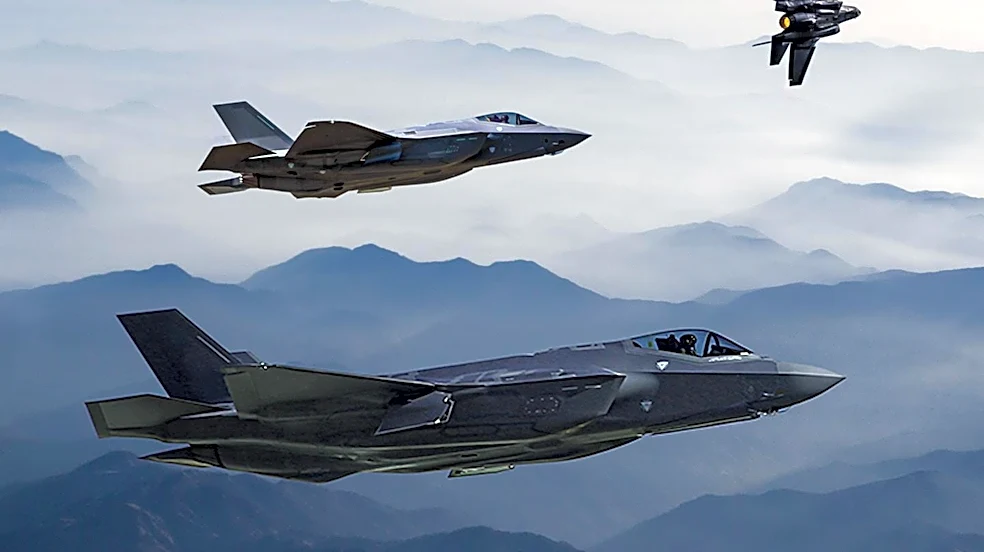
for the Power & Thermal Management System (PTMS) turbomachines used in F-35 aircraft. The PTMS, developed by Honeywell Aerospace, integrates multiple aircraft systems to enhance overall air vehicle efficiency and performance. The new facility in the Netherlands aims to provide F-35 operators with faster turnaround times for repairs, reduce logistical demands, and increase aircraft availability. Honeywell Aerospace was responsible for the development and integration of the Modular Test Cell, leveraging its expertise in scalable sustainment solutions for advanced defense platforms. Aeronamic will contribute its regional maintenance, repair, and overhaul (MRO) expertise to support the facility's operations and strengthen local sustainment capabilities for the F-35 fleet.
Why It's Important?
This collaboration is crucial for enhancing the operational readiness and efficiency of F-35 fleets in Europe. By localizing the testing and repair of critical PTMS turbomachines, the initiative significantly reduces the time aircraft spend out of service, which is vital for maintaining defense capabilities. Ryan Lees, vice president and general manager, Air & Thermal Controls, Honeywell Aerospace, emphasized that this milestone reflects a commitment to providing advanced sustainment solutions that improve readiness and efficiency for F-35 operators. The establishment of this capability in the Netherlands also strengthens the region's role within the broader F-35 sustainment network, fostering local expertise and capacity. This strategic move aligns with international defense strategies focused on decentralizing maintenance operations to improve responsiveness and reduce lifecycle costs for advanced military aircraft.
What's Next?
The Modular Test Cell is expected to immediately begin supporting F-35 operators in the region, leading to accelerated repair cycles and improved aircraft availability. This initiative builds upon the ongoing collaboration between Honeywell Aerospace and Aeronamic to develop regional sustainment infrastructure for the F-35 program. Future efforts will likely focus on further localizing maintenance and repair operations across Europe, which could lead to additional facilities or expanded capabilities in other strategic locations. This localization strategy is anticipated to continue reducing lifecycle costs for the F-35 program and further enhance fleet readiness across participating nations. The success of this test cell could serve as a model for similar sustainment solutions for other advanced defense platforms globally.
Beyond the Headlines
The establishment of this regional test cell highlights a broader trend in defense logistics towards distributed sustainment networks. This approach not only improves operational efficiency but also enhances national security by reducing reliance on centralized repair hubs, which can be vulnerable to geopolitical disruptions. Ethically, it promotes self-sufficiency among allied nations in maintaining critical defense assets. From an economic perspective, it fosters local job creation and technological skill development within the host country, strengthening its aerospace industry. This model also underscores the importance of international partnerships in modern defense, where specialized expertise from companies like Honeywell Aerospace and regional MRO providers like Aeronamic combine to create robust support systems for complex military hardware. The long-term implications include a more resilient and responsive global defense infrastructure for advanced aircraft.