








What's Happening?
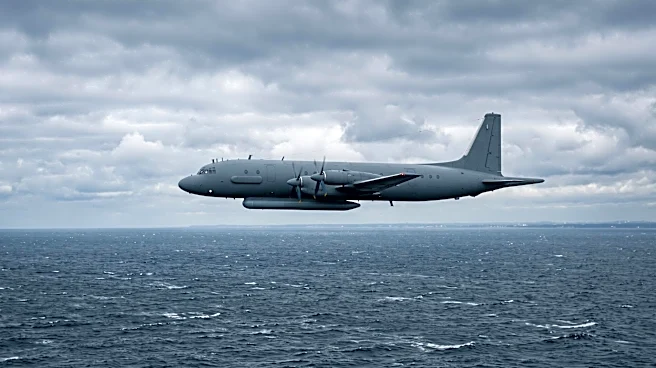
A Russian Il-20 reconnaissance aircraft violated Finnish airspace over the Gulf of Finland, penetrating approximately 8.7 kilometers (5.4 miles) into Finnish territory and remaining there for about three minutes. Finland’s Border Guard reported the incident
on August 21, stating the aircraft crossed into the country’s airspace south of the island of Utö. This marks the second reported Russian violation of Finnish airspace in several months, contributing to growing concerns about Moscow’s military aviation activities along NATO’s northeastern flank. The Il-20 is a Russian military reconnaissance aircraft designed for intelligence-gathering and electronic surveillance missions. Finland, having joined NATO in 2023, considers this incursion a breach of a member of the military alliance's airspace. A preliminary investigation has been launched by Finland’s Border Guard to ascertain the full circumstances of the breach.
Why It's Important?
This incident is significant as it represents a direct violation of a NATO member's sovereign airspace by a Russian military aircraft, underscoring heightened tensions in the Baltic Sea region. Finland's recent accession to NATO in 2023 means that such incursions now directly challenge the alliance's collective defense principles. The use of an Il-20 reconnaissance aircraft suggests intelligence-gathering motives, which could be aimed at testing NATO's response capabilities or gathering data on Finnish and NATO defenses. These repeated violations, including a previous incident involving Polish fighter aircraft intercepting another Russian Il-20, indicate a pattern of assertive Russian military behavior near NATO borders. This behavior necessitates a robust and coordinated response from NATO to deter further provocations and ensure the security of its member states, particularly those on the eastern flank.
What's Next?
Finland’s Border Guard will continue its preliminary investigation into the incident to fully establish the circumstances surrounding the breach. This investigation will likely involve analyzing radar data, flight paths, and communication logs to determine the exact nature and intent of the Russian aircraft's incursion. NATO is expected to closely monitor the situation and may issue a formal condemnation or take diplomatic steps in response to the airspace violation. Further, NATO members, particularly those in the Baltic region, may increase their air policing missions and enhance surveillance capabilities to detect and deter future incursions. The incident could also prompt discussions within NATO regarding strengthening air defense systems and response protocols to address the evolving threat landscape posed by Russian military activities.
Beyond the Headlines
The repeated Russian airspace violations, particularly after Finland joined NATO, highlight a broader geopolitical strategy by Moscow to challenge and test the resolve of the alliance. These actions contribute to a climate of uncertainty and increased military readiness in Northern Europe. Beyond the immediate security implications, such incidents can have long-term effects on regional stability and international relations. They reinforce the narrative of an assertive Russia and may lead to increased defense spending and military integration among NATO members. The psychological impact on populations in frontline states, who witness these incursions, can also be significant, fostering a sense of vulnerability and urgency regarding national and collective defense. This ongoing pattern of behavior underscores the importance of international law and the need for clear, consistent responses to maintain peace and security.