






What's Happening?
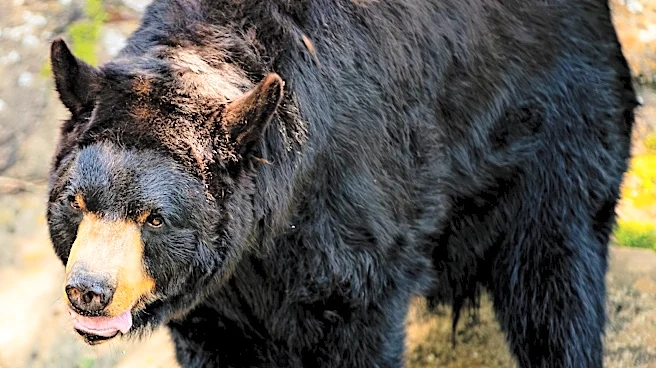
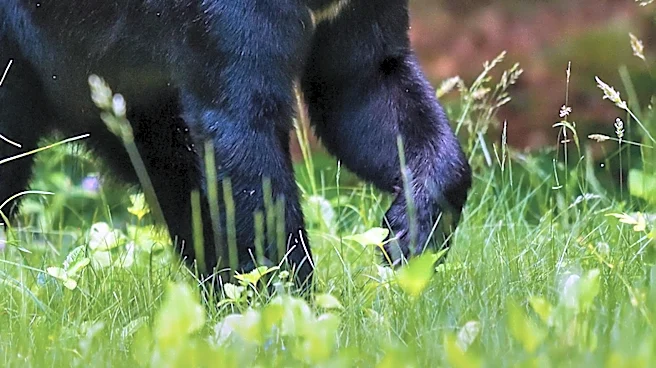
A north Asheville resident, Whit Alexander, discovered a black bear inside her home via her security camera. The incident occurred on August 18, prompting immediate concern for her pets. Upon returning home, Alexander found her dogs safe but the bear still
present, which she then ushered out. This event follows a separate incident where a bear injured another north Asheville resident. Alexander's neighbors have also reported recent bear encounters, including one instance where a bear entered a neighbor's porch and accessed dog treats. The North Carolina Wildlife Resources Commission (NCWRC) has advised residents to take measures to deter bears, such as securing trash and pet food and removing bird feeders when bears are active. Alexander's family has since stopped using their doggy door and has placed 'unwelcome mats'—plywood slabs with nails—on their back deck as a deterrent.
Why It's Important?
This incident highlights the increasing frequency of human-wildlife conflicts in residential areas, particularly with black bears in regions like Asheville, North Carolina. The presence of bears inside homes poses significant safety risks to residents and their pets, as demonstrated by the recent injury to another resident. The community's response, including the implementation of deterrents like 'unwelcome mats' and the cessation of doggy door use, reflects a growing need for residents to adapt their living habits to coexist with wildlife. The NCWRC's recommendations underscore the importance of proactive measures to prevent bears from becoming habituated to human food sources, which can lead to more dangerous encounters. This situation also brings to light the broader challenge of managing wildlife populations in areas experiencing urban expansion, where natural habitats are encroached upon, forcing animals into closer contact with human settlements.
What's Next?
Following this incident, residents in north Asheville are expected to continue implementing and exploring additional safety measures to prevent bear intrusions. The North Carolina Wildlife Resources Commission will likely reiterate and possibly expand its public awareness campaigns on bear safety and deterrence, emphasizing the importance of securing attractants. Community discussions may arise regarding collective strategies to manage bear activity, potentially involving local authorities and wildlife experts to develop comprehensive plans for coexistence. There could also be an increased focus on educating new residents about living in bear country and the necessary precautions. The long-term goal will be to find sustainable solutions that ensure both human safety and the well-being of the bear population, potentially leading to more structured community-wide initiatives or policy considerations regarding wildlife management in urban-adjacent areas.
Beyond the Headlines
The recurring bear encounters in Asheville, North Carolina, underscore a deeper ecological and societal challenge: the increasing overlap between human development and wildlife habitats. This situation raises questions about urban planning, conservation efforts, and the responsibility of residents in coexisting with nature. The reliance on deterrents like 'unwelcome mats' reflects a reactive approach, highlighting the need for more proactive strategies that address the root causes of bear-human conflicts, such as habitat fragmentation and food availability. Ethically, the community faces the dilemma of balancing human safety with the welfare of wildlife, particularly when incidents lead to discussions about relocating or euthanizing animals. This ongoing interaction could also influence local tourism, which often promotes the natural beauty of the region, by necessitating a greater emphasis on wildlife safety and responsible outdoor practices. The long-term implications could involve a re-evaluation of how urban areas bordering wilderness are designed and managed to minimize such conflicts.