


What's Happening?
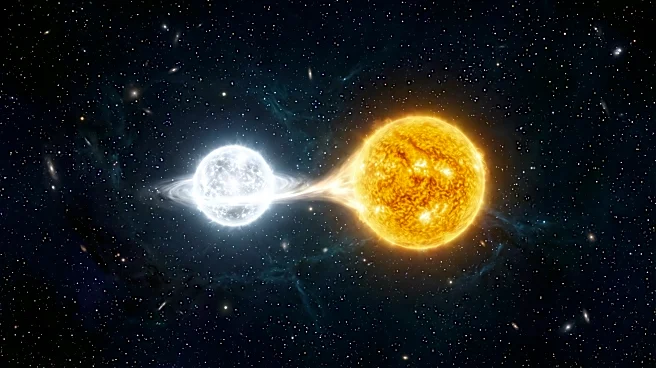
Astronomers have identified what appears to be a red giant star in the Andromeda galaxy, specifically WNTR23bzdiq, in the process of engulfing a smaller companion star. This event, observed in the binary star system named Bao, is considered a potential
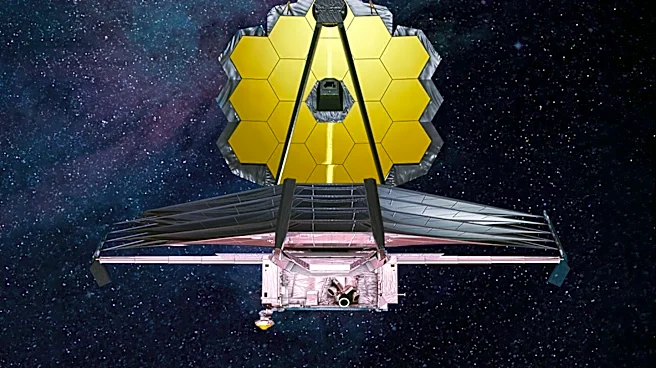
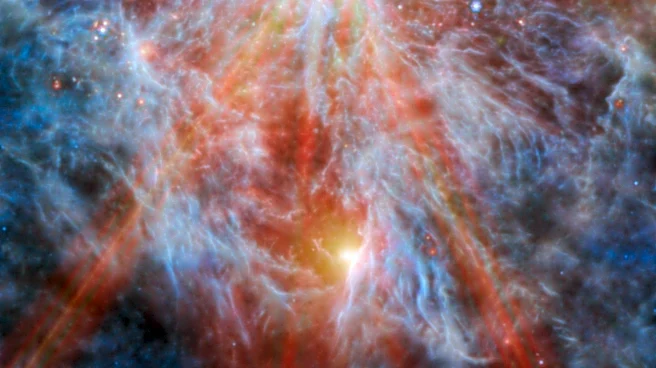
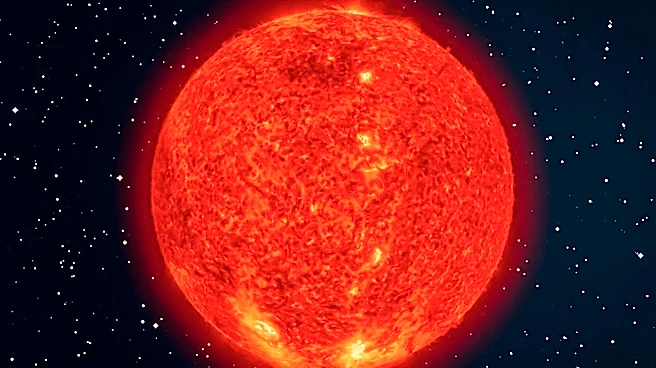
first for direct observation of such a stellar merger. The red giant is approximately seven times more massive and 350 times wider than the Sun. Observations from NASA's NEOWISE space telescope and the WINTER telescope at the Palomar Observatory in California first detected an increase in the star's brightness in 2023, with earlier data indicating gradual brightening since 2018. Researchers suggest the smaller star, about 70% the mass of the Sun, spiraled towards the red giant's core, causing friction, heating, and increased brightness. A powerful flare was recorded at the end of 2025, and the James Webb Space Telescope observed the object 47 days later. An estimated 0.1–0.2 solar masses of material were ejected during this eruption.
Why It's Important?
This observation is significant for astrophysics as it could provide direct evidence and a deeper understanding of stellar evolution and binary star interactions. Stellar mergers, particularly the engulfment of one star by another, are crucial processes in the life cycle of stars and the formation of various astronomical phenomena. Understanding these events helps refine models of stellar dynamics, energy release, and the eventual fate of star systems. The ability to trace such a process through observations, rather than relying solely on theoretical models, offers invaluable empirical data. This research contributes to the broader scientific effort to comprehend the universe's fundamental mechanisms, impacting fields from stellar nucleosynthesis to the distribution of elements in galaxies. The data gathered from the Bao system could lead to breakthroughs in predicting and characterizing similar events across the cosmos.
What's Next?
The final outcome of the Bao system remains undetermined, with two primary scenarios being considered: the complete merger of the two stars into a single entity, or their stabilization into a much tighter orbital configuration. To ascertain the system's ultimate fate, astronomers plan to continue monitoring it after the effects of the recent eruption subside. Ongoing observations will be critical for gathering more data on the system's behavior and evolution. The study's initial findings were published on November 18 in the journal Nature, indicating that further research and analysis are anticipated. Future observations will aim to clarify the physical processes involved in the engulfment and the long-term implications for the binary system, potentially leading to updated theories on stellar mergers.
Beyond the Headlines
The direct observation of a star engulfing another has profound implications for our understanding of the universe's violent and dynamic nature. Such events are not merely astronomical curiosities but are fundamental to the cosmic cycle of matter and energy. The friction and heating described in the process highlight the immense forces at play in stellar interiors, challenging and refining our theoretical models of stellar physics. This event also underscores the capabilities of modern astronomical instruments, like the James Webb Space Telescope, in capturing transient and complex phenomena across vast cosmic distances. The ethical dimension of scientific inquiry is also subtly present, as researchers meticulously observe and interpret events that unfold over cosmic timescales, pushing the boundaries of human knowledge about the origins and destinies of stars.