


What's Happening?
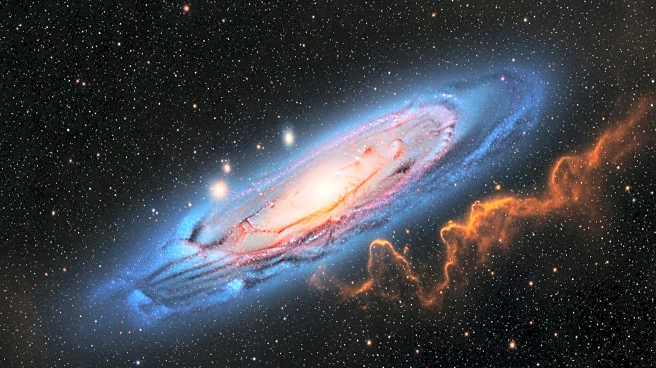
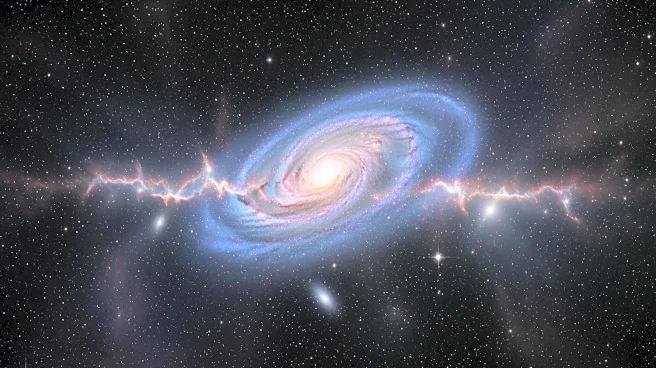
The Hubble Space Telescope has captured a stunning image of the 'Lost Galaxy,' scientifically known as NGC 4535, located in the Virgo constellation. This galaxy, once a faint smudge to Earth-based telescopes, is now revealed in high resolution, showcasing
its spiral arms filled with bright blue star clusters and zones of ionized hydrogen gas, known as H II regions. These regions indicate recent star formation, as massive, newly formed stars emit intense ultraviolet radiation and stellar winds, energizing the surrounding gas. The image is part of a broader effort to catalog H II regions in nearby galaxies, aiding in the understanding of star formation processes.
Why It's Important?
The detailed imaging of NGC 4535 provides astronomers with a valuable laboratory to study star formation and the evolution of galaxies. By mapping H II regions, scientists can gain insights into the lifecycle of stars and the dynamics of galaxy growth. This research contributes to a deeper understanding of the universe's structure and the processes that govern the formation of celestial bodies. The findings from such studies can also enhance our knowledge of the conditions necessary for star formation and the potential for life-supporting environments in other parts of the universe.