
What's Happening?
A recent image of Comet C/2025 R3 (PanSTARRS) highlights the impact of low Earth orbit (LEO) satellites on the night sky. The image, taken in Bavaria, Germany, shows the comet surrounded by light streaks
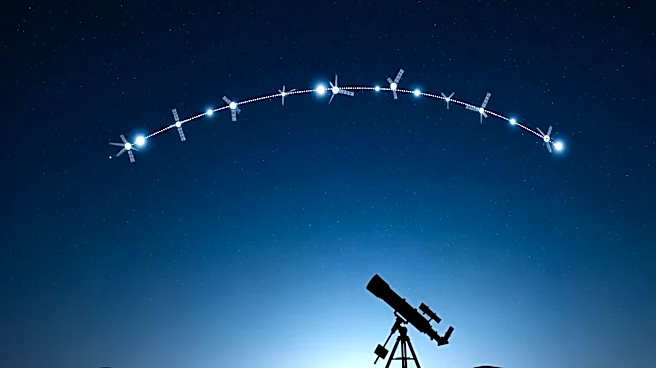
from these satellites, illustrating the growing concern among astronomers about the increasing number of satellites obstructing celestial observations. The article criticizes billionaires, particularly those involved in satellite deployment, for contributing to this issue, likening it to environmental degradation. The current number of satellites is around 10,000, but plans for significantly more, including larger solar arrays for orbital AI data centers, could exacerbate the problem.
Why It's Important?
The proliferation of LEO satellites poses a significant challenge to astronomical research and the visibility of the night sky. As more satellites are launched, the potential for interference with astronomical observations increases, potentially hindering scientific discoveries. This development raises concerns about the balance between technological advancement and environmental preservation. The impact on astronomy could also affect educational and cultural appreciation of the night sky, as light pollution from satellites diminishes the visibility of celestial bodies.