





What's Happening?
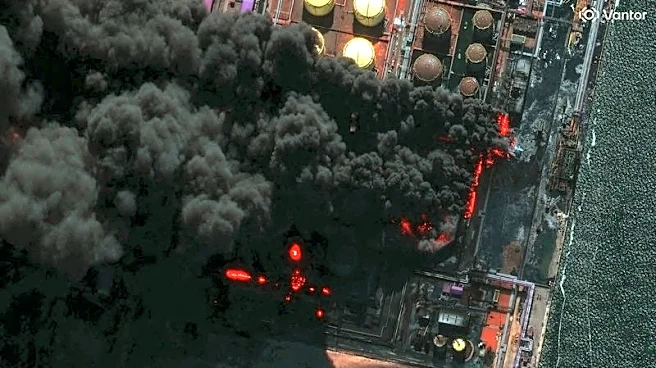
Ukrainian drones have reportedly struck strategic energy infrastructure in Russia's Krasnodar region, specifically targeting the Krymsk line production and dispatch station (LPDS). This facility is crucial for pumping oil and petroleum products through
several pipelines towards the port of Novorossiysk and other refineries. The attack occurred just hours before a scheduled Easter ceasefire, with explosions reported in Gelendzhik and the Krymsk district. Local residents noted flashes over the Black Sea, and Russian sources confirmed the sounds of explosions across the region. This follows a previous attack on the same facility on April 9. Official details regarding the extent of the damage have not been disclosed.
Why It's Important?
The strike on the Krasnodar region's oil infrastructure highlights the ongoing tensions between Ukraine and Russia, even as a ceasefire is set to begin. The targeted facility plays a significant role in Russia's oil distribution network, and its disruption could impact Russia's energy exports and economic stability. This escalation may further strain diplomatic relations and complicate peace efforts. The timing of the attack, just before a ceasefire, suggests strategic intent to weaken Russia's economic capabilities and leverage in negotiations. The broader implications could affect global energy markets, potentially leading to increased prices and supply chain disruptions.
What's Next?
As the ceasefire begins, both Ukraine and Russia may face increased pressure to adhere to the terms and avoid further escalation. However, the recent attacks could lead to retaliatory measures from Russia, potentially undermining peace efforts. International stakeholders, including the U.S. and European nations, may need to intervene diplomatically to prevent further conflict. Monitoring the situation closely will be crucial for assessing the ceasefire's effectiveness and the potential for renewed hostilities. The international community may also need to address the humanitarian impact on affected regions.
Beyond the Headlines
The attacks on energy infrastructure raise ethical and legal questions about targeting civilian facilities during conflict. Such actions could be seen as violations of international law, prompting discussions on the rules of engagement in warfare. Additionally, the focus on energy assets underscores the strategic importance of economic targets in modern conflicts, where disrupting supply chains can have far-reaching consequences. This development may influence future military strategies and international policies regarding the protection of critical infrastructure.