
What's Happening?
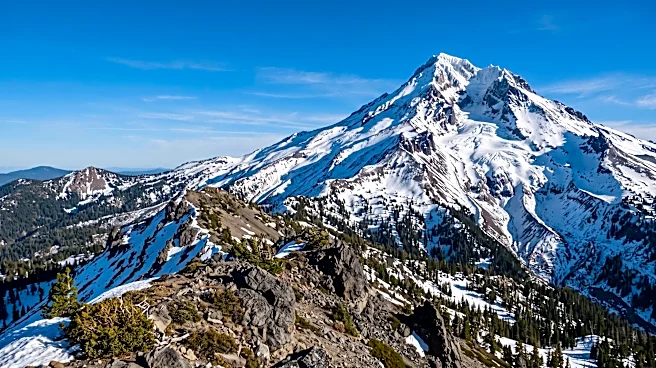
Three young men with limited climbing experience required rescue on Mt. Shasta after their reliance on artificial intelligence (AI), YouTube videos, and the mobile mapping app AllTrails led to critical
errors in their ascent plan. The U.S. Forest Service - Shasta-Trinity National Forest reported that the hikers admitted to over-relying on AI rather than their own critical thinking. Their planned eight-hour climb extended to 16 hours, and they were unprepared for the extended duration, lacking sufficient food, water, warm clothes, and emergency shelter. One hiker sustained a knee injury during the descent, and their phone, used for navigation, ran out of battery, with a backup charger failing. This incident marks the first time a 911 rescue on Mt. Shasta has been directly linked to incorrect information provided by AI, according to National Forest Service lead climbing ranger Nick Meyers.
Why It's Important?
This incident highlights the growing risks associated with over-reliance on AI and digital tools for activities requiring specialized knowledge and critical decision-making, particularly in hazardous environments. While AI can be a valuable resource, its limitations in providing nuanced, context-specific advice for complex situations like mountaineering are evident. The event underscores the potential for a false sense of security when individuals trust technology without sufficient personal expertise or verification from human experts. For the outdoor recreation industry and emergency services, it signals a new challenge: managing incidents where AI-generated misinformation contributes to dangerous situations. It also raises questions about the responsibility of AI developers to include disclaimers or warnings for high-risk applications, and the need for public education on the appropriate use of AI in critical planning.
What's Next?
Authorities, such as the U.S. Forest Service, are likely to increase public awareness campaigns emphasizing the importance of traditional mountaineering knowledge, consulting human experts, and fact-checking AI-generated information for outdoor activities. Climbing rangers and guide services may see an increased need to educate individuals on the 'ten essentials' of mountaineering and the dangers of under-preparation. AI developers might face pressure to integrate more robust disclaimers or context-aware warnings into their algorithms, especially for advice related to safety-critical activities. The incident could also prompt discussions within the tech community about ethical AI development and the need to prevent the dissemination of potentially harmful information, particularly when human lives are at stake. Future incidents may lead to calls for regulatory guidelines on AI use in public safety contexts.
Beyond the Headlines
The Mt. Shasta rescue reflects a broader societal trend of increasing dependence on technology, often at the expense of developing critical thinking and practical skills. This incident serves as a stark reminder that while AI can augment human capabilities, it cannot replace human judgment, experience, and 'mountain sense,' especially in unpredictable natural environments. It touches upon the ethical implications of AI, particularly concerning the accuracy and reliability of information provided for high-stakes activities. The event also highlights a cultural shift where digital convenience might overshadow the rigorous preparation and respect traditionally associated with challenging endeavors. This could lead to a re-evaluation of how technology is integrated into education and training for outdoor pursuits, emphasizing a balanced approach that combines technological aids with foundational knowledge and human expertise.