







What's Happening?
Rene Haas, CEO of Arm Holdings, has stated that artificial intelligence (AI) could lead to a cure for cancer within our lifetimes. According to an interview with the BBC, Haas believes that while modeling complex biological processes like how cancer affects
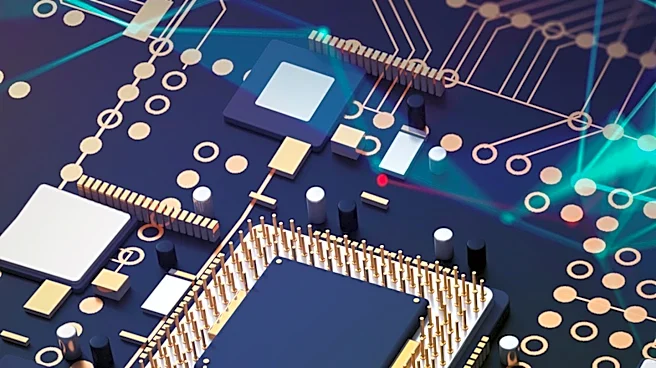
DNA markers is currently too challenging for both humans and existing AI, advancements in computing and AI models will eventually make these problems solvable. However, Haas also warned that the expansion of AI infrastructure, crucial for such breakthroughs, is being hampered by a significant shortage of chips needed for data centers. He described the current environment as "absolutely supply-constrained," emphasizing the need for more chip factories to support the growing demand for increasingly large data centers. This chip bottleneck extends to AI memory, with industry executives indicating that high-bandwidth memory capacity cannot be expanded quickly enough to match the pace of AI infrastructure investment.
Why It's Important?
The statements from Arm CEO Rene Haas underscore the immense potential of AI in transforming healthcare, particularly in areas like cancer research and drug discovery, which has profound implications for public health and the U.S. healthcare industry. The ability of AI to accelerate drug development and testing could lead to more effective treatments and potentially save millions of lives, significantly reducing healthcare costs and improving quality of life. However, the identified chip shortage presents a critical bottleneck, threatening to slow down these advancements. This supply constraint impacts not only the pace of medical innovation but also the broader U.S. technology sector, which relies heavily on semiconductor manufacturing. The demand for specialized chips and high-bandwidth memory highlights a strategic vulnerability, as the U.S. and global economies depend on a limited number of manufacturers, primarily in Asia, for these essential components. Addressing this shortage is vital for maintaining technological leadership and realizing the full benefits of AI across various sectors.
What's Next?
The immediate future will likely see continued efforts to address the semiconductor supply chain challenges. Haas's comments suggest a pressing need for increased investment in chip manufacturing capacity globally, including potentially in the U.S., to support the burgeoning AI industry. While building new fabrication plants (fabs) is a multi-billion dollar, multi-year endeavor requiring specialized labor and resources, the urgency highlighted by the AI bottleneck may accelerate these investments. Pharmaceutical companies, like Bristol Myers Squibb, are already expanding their AI infrastructure, indicating a clear industry trend towards AI-driven research. The ongoing discussions about bringing parts of the physical chip supply chain to regions like the U.K., as mentioned by Haas, suggest a global push for more localized and resilient semiconductor production. The development of more power-efficient AI technologies, such as those from Arm, will also be crucial in managing the demand for computing resources while manufacturing capacity catches up.
Beyond the Headlines
The vision of AI curing cancer, while inspiring, also brings to light deeper ethical and societal considerations. The development of such powerful AI tools raises questions about data privacy, algorithmic bias in medical diagnoses, and equitable access to advanced treatments. If AI-driven cures become a reality, ensuring that these life-saving technologies are accessible to all, regardless of socioeconomic status, will be a significant challenge. Furthermore, the reliance on AI for complex medical problems could shift the landscape of medical education and practice, requiring new skill sets for healthcare professionals. The chip shortage itself points to a broader geopolitical issue: the concentration of critical manufacturing capabilities in a few regions. This concentration creates economic and national security risks, prompting a global reevaluation of supply chain resilience and the strategic importance of semiconductor independence. The race to develop and deploy advanced AI, therefore, is not just a technological endeavor but a complex interplay of scientific, economic, ethical, and geopolitical factors.