








What's Happening?
German authorities have identified two main suspects in a drone incident at Leipzig Airport in early August. The suspects are Andrei K., a Belarusian citizen, and Oleg L., a Russian national with alleged ties to Russian military intelligence (GRU). According
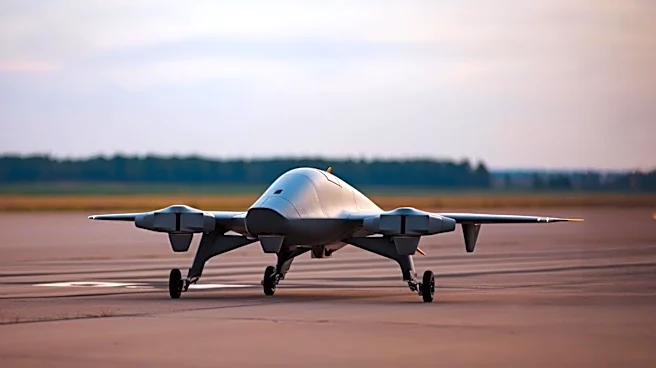
to *Welt am Sonntag*, citing investigative materials and German security officials, Oleg L. arrived in Germany via Turkey, and German law enforcement was aware of his connection to Russia’s Main Intelligence Directorate upon his arrival, though he was not placed under surveillance. The incident involved a drone carrying approximately 1.8 kg of Semtex explosives, which was discovered near a Ukrainian plane. The detonator reportedly failed, preventing an explosion that could have destroyed part of the airport. Forensic investigators found DNA traces on a glove from an antenna structure used to control the drone, linking Andrei K. to previous criminal offenses in Finland and a fire at a hardware store in Łódź, Poland, in the summer of 2024, which authorities also attributed to Russian involvement. The German government officially blamed Russia for the incident on September 1, leading to the closure of the 'Russian House' in Berlin and the Russian Consulate General in Bonn.
Why It's Important?
This incident highlights the escalating concerns over alleged Russian hybrid warfare tactics targeting European infrastructure and support for Ukraine. The direct attribution of the drone attack to Russia by the German government, and the subsequent diplomatic actions, underscore a significant hardening of stance against perceived Russian aggression. The use of explosives and the targeting of an airport near a Ukrainian cargo plane suggest an intent to disrupt aid to Ukraine and test European responses. The identification of individuals with alleged ties to Russian military intelligence in such an operation raises serious questions about state-sponsored sabotage within NATO member countries. This development could further strain diplomatic relations between Germany and Russia, potentially leading to more retaliatory measures. The incident also contributes to a broader narrative of increased sabotage, arson, and cyberattacks across Europe, which European leaders, including European Commission president Ursula von der Leyen, have described as a 'new escalation' and a 'broader pattern of increasingly dangerous incidents.'
What's Next?
Following Germany's official accusation and the closure of Russian diplomatic and cultural institutions, Moscow retaliated by closing the German Consulate General in St. Petersburg and the Goethe Institutes. Further diplomatic and economic repercussions between Germany and Russia are likely. Investigations into the broader network of individuals involved in such alleged sabotage operations across Europe are expected to continue, potentially leading to more arrests and revelations. The incident may also prompt European nations to enhance their counter-drone capabilities and intelligence sharing to prevent future attacks. The ongoing debate within Germany and other European countries regarding the public presentation of evidence for such accusations will likely persist, as some political parties have questioned the lack of publicly disclosed proof. This event could also influence future defense spending and security policies across Europe, particularly concerning hybrid threats and critical infrastructure protection.
Beyond the Headlines
The Leipzig drone incident, regardless of the public availability of evidence, underscores a profound shift in the nature of geopolitical conflict, moving beyond conventional warfare to encompass covert operations and hybrid attacks on civilian infrastructure. The alleged involvement of Russian military intelligence in such an act on German soil raises critical questions about national sovereignty and the effectiveness of international security frameworks. The incident also highlights the challenge for democratic governments in balancing national security imperatives with transparency, especially when dealing with sensitive intelligence. The 'naming-and-shaming' strategy adopted by European leaders, while intended to deter, also risks escalating tensions without necessarily providing irrefutable public proof, which can lead to skepticism and internal political divisions. This situation could contribute to a long-term erosion of trust between nations and foster an environment of heightened suspicion, impacting international cooperation on various fronts beyond security.