


What's Happening?
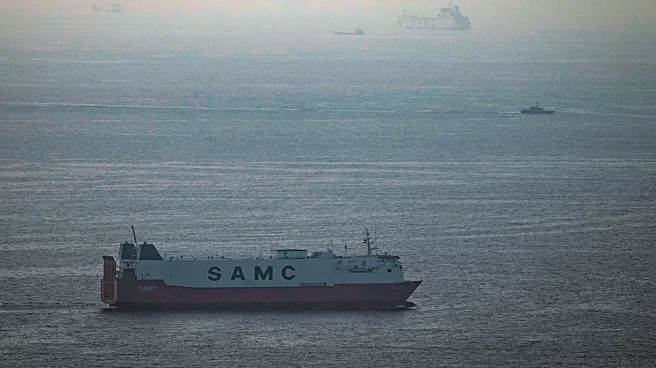
Bahrain has introduced a draft resolution at the UN Security Council to authorize the use of force to protect shipping in the Strait of Hormuz. This proposal, backed by Gulf Arab states and the U.S., aims to counter Iranian threats to international navigation.
However, the resolution faces potential vetoes from Russia and China. France has proposed an alternative resolution, emphasizing diplomacy and de-escalation. The situation underscores regional concerns over Iran's actions, which have disrupted shipping and threatened global oil supplies.
Why It's Important?
The Strait of Hormuz is a vital maritime route for global oil transportation, and its security is crucial for international energy markets. Bahrain's proposal highlights the urgency of addressing Iranian threats to navigation. The potential for military action raises concerns about further escalation and its impact on regional stability. The involvement of major powers like Russia and China in the UN Security Council adds complexity to diplomatic efforts. The outcome of these resolutions could influence future international responses to maritime security challenges.
What's Next?
The UN Security Council will deliberate on the proposed resolutions, with the potential for diplomatic negotiations to address the situation. The involvement of international stakeholders, including the U.S. and European nations, will be critical in shaping the response. The possibility of military action remains, depending on Iran's actions and the international community's willingness to enforce maritime security. The situation will continue to evolve as diplomatic and military strategies are assessed.