





What's Happening?
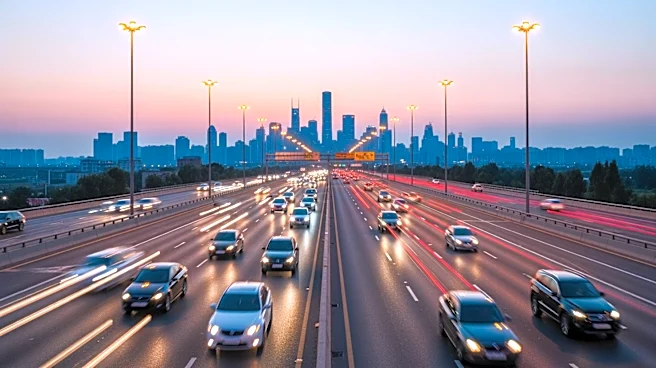
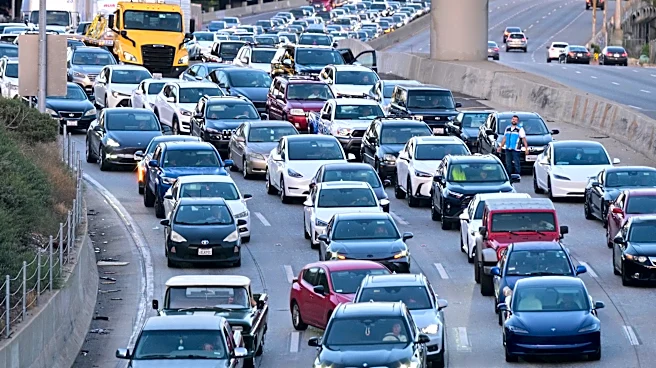
In Los Angeles, despite the average price of regular gasoline reaching $6.05 per gallon, traffic levels have remained largely unchanged. This price is nearly 28% higher than a year ago and about 36% above the national average, according to AAA. An analysis
by the California Department of Transportation over an eight-week period ending April 23 found no significant drop in driving on major freeways such as the 405, 10, and 5. While some areas saw traffic increase by nearly 9% and others decrease by almost 3%, overall vehicle travel remained stable. Experts, like Brian Taylor from UCLA's Institute of Transportation Studies, suggest that people rarely change their driving habits even when gas prices rise, noting that a 10% drop in traffic can lead to a 40-50% reduction in delays.
Why It's Important?
The persistence of traffic levels in Los Angeles despite high gas prices highlights the entrenched nature of car dependency in urban areas. This situation underscores the challenges faced by policymakers in encouraging public transit use and reducing traffic congestion. The findings suggest that economic factors alone may not be sufficient to alter driving behaviors, which has implications for urban planning and environmental policy. The continued reliance on personal vehicles contributes to pollution and greenhouse gas emissions, complicating efforts to meet climate goals. Additionally, the financial burden of high gas prices on residents could exacerbate economic inequalities.
What's Next?
As gas prices remain high, there may be increased pressure on local governments to invest in public transportation infrastructure and incentivize its use. Policymakers might explore measures such as congestion pricing or expanded public transit options to alleviate traffic and reduce emissions. The data could also prompt further studies into behavioral economics and transportation habits, potentially influencing future urban development strategies. Stakeholders, including city planners and environmental groups, may advocate for policies that address both economic and environmental concerns.